
The Unseen Campaign: Mastering Tabletop Logistics
Beyond the dice rolls and character sheets lies a meta-game of logistics. Discover how veteran groups tackle the epic challenge of getting their grandest campaigns to the table, from space to player count.
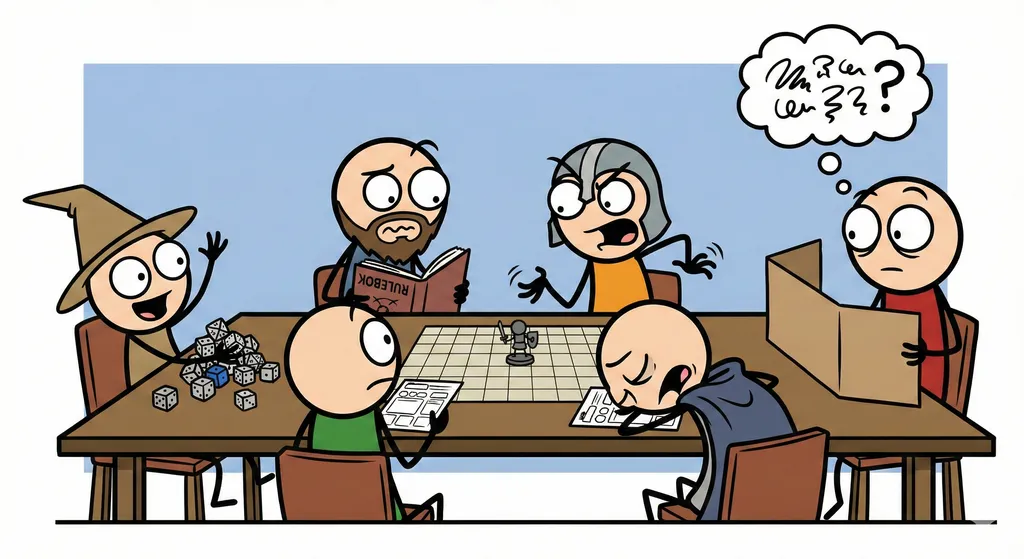
Every seasoned Game Master knows the true first boss of any campaign isn't a lich or an ancient dragon; it's the Monday afternoon ritual of scheduling. This week, we're diving deep into the intricate, often overlooked, meta-game that underpins every session of grand adventures like the hypothetical "The Grand Conclave of Aethelgard" by Mythic Forge Games. The source text from BoardGameGeek, penned by Justin Bell, speaks volumes not about a specific title, but about the universal challenge of mobilizing a dedicated group, finding suitable ground, and negotiating the very experience itself. It's a story every long-running table can tell, a saga of logistical triumphs and near-misses that shapes the very fabric of our shared narratives.
Let's be blunt: the 'crunch' of group logistics is a system unto itself, often more complex than the game we intend to play. Bell's description of 'horse trading' for game selection and the perennial quest for adequate table space resonates deeply. Consider a scenario where "The Grand Conclave of Aethelgard" demands not just player characters, but a full-scale tactical map for its climactic multi-faction battles, requiring dozens of miniatures and a sprawling 4x6 foot battlemat. This isn't just about rolling dice; it's about real estate. The 'mechanics' here involve an unspoken (or often, explicitly negotiated) resource management system. Who has the living room capable of hosting 10+ players, potentially across 3-4 concurrent tables? What's the 'currency' for getting your preferred game to the table – is it offering to host, providing snacks, or a well-timed, persuasive argument? Groups often develop an informal 'DM rotation' or 'game rotation' system, a form of soft democracy ensuring everyone gets a turn in the spotlight, whether as a GM or playing their favorite system. Some groups even employ shared digital calendars and polls, transforming the weekly 'set up' into a streamlined, albeit still political, minigame. The 'initiative' for scheduling often falls to the most organized, or perhaps the most desperate to play, a testament to the dedication required.
Beyond the practicalities, there’s a rich 'lore' to every long-standing gaming group. This isn't about the dragons and dungeons of Aethelgard, but the shared history of the players themselves. The 'guy whose partner is out of town' becomes a recurring character in the group's internal narrative. The player with 'a big piece of chicken with a hundred minis' isn't just a player; they're the keeper of the grandest battles, the one whose collection necessitates larger venues. These internal narratives, built over years of shared triumphs and defeats, form the true 'fluff' of our hobby. The unspoken rules of etiquette, the established pecking order for snack duties, the legendary tales of past sessions – these are the sagas whispered around the table before the first die is ever cast. This communal lore is what binds a group, transforming mere acquaintances into a fellowship. It's the reason we endure the logistical hurdles; the shared experience becomes more than the sum of its parts. It's the intangible glue that keeps a "Grand Conclave" running for years, even when real life conspires against it. The 'lore' of the table is the meta-narrative of friendship, dedication, and the collective pursuit of fun.
So, is this logistical meta-game good for the actual game? Absolutely, when handled with care and communication. The trials of organizing a large-scale TTRPG like "The Grand Conclave of Aethelgard" can forge a stronger, more resilient group. It forces players to cooperate outside the game world, fostering a deeper sense of camaraderie. However, without clear communication and a willingness to compromise, these logistical hurdles can become insurmountable, leading to burnout and group dissolution. A GM's role extends beyond the narrative; they often become the chief diplomat, the scheduling wizard, the space scout. They understand that a truly epic campaign isn't just about clever encounters or deep lore; it's about the consistent, shared experience. The 'table feel' is profoundly impacted by how smoothly these behind-the-scenes operations run. A well-oiled machine ensures that when players finally sit down, their minds are on their characters, not on the lingering frustration of a last-minute venue change. The anticipation built through the scheduling 'horse trading' can even heighten the enjoyment, making the eventual session feel like a hard-earned reward. This is where the magic happens, where the practicalities fade, and the story takes center stage. To truly master the game, one must first master the art of getting to the table. For those looking to dive deeper into the world of Aethelgard and its intricate systems, I recommend checking out the community discussions and fan-made scenarios at "The Grand Conclave" forum, where players are constantly sharing tips on managing large-scale battles.
Top Pick: The Crit Sheet's GM Toolkit
Essential resources for campaign logistics
Check Price on Amazon →Related Stories
Chthonic Depths: Emergent Terror in the Gauntlet of Azyr
Ironclad Games' new crowdfunding project, Chthonic Depths, promises a dynamic TTRPG experience focusing on emergent narrative and brutal resource management. Th
Yatagan: A New Grimdark TTRPG Forged in Iron and Ash
Yatagan, the new grimdark TTRPG from Grimdark Forge Games, promises a brutal universe akin to Warhammer 40k. We delve into its unique mechanics and lore, assess
Aetherbound Chronicles: Obsidian Gate's New Systems Break the Mold
Arcane Forge Games just unveiled two ambitious systems for 'Aetherbound Chronicles: The Obsidian Gate': the Aspect System and Dynamic Threat Tracker. We dissect