
The Unsung Architects: Why Creator Credit Isn't Just Fair, It's Crucial
Our hobby thrives on creativity, yet creators often remain uncredited. We delve into how proper recognition impacts game design, innovation, and the very future of TTRPGs at your table.
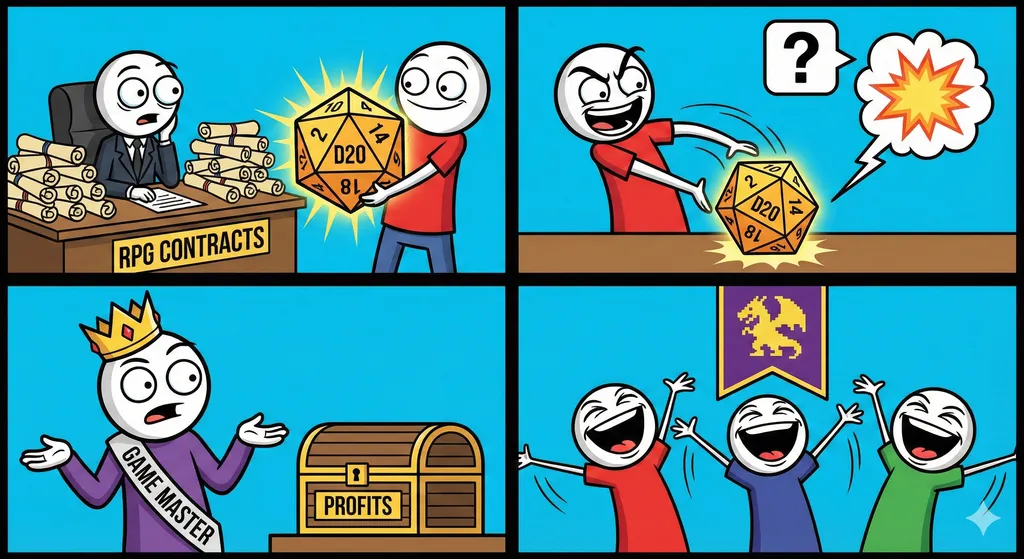
The lifeblood of our hobby isn't solely found in the satisfying clatter of polyhedral dice or the dog-eared pages of a core rulebook; it's the boundless creativity poured into every adventure path, every monster stat block, every evocative piece of lore. Yet, the very hands that craft these worlds often remain obscured, a shadowy presence behind the glossy covers. A recent, insightful piece from EN World, "Giving creators their due credit: better practices for publishers, awards, and media," isn't just news; it’s a critical examination of the foundation upon which our entire TTRPG industry stands, challenging us to scrutinize how The Crit Sheet, and indeed every player, GM, and publisher, recognizes the architects of our escapism.
Let's peel back the curtain and examine the 'crunch' of creator recognition – or the lamentable lack thereof. Too often, the mechanics of credit in our industry resemble a poorly designed encounter: opaque, frustrating, and prone to critical failure. Freelancers, the backbone of much TTRPG content, frequently find themselves operating under work-for-hire agreements that strip away their public-facing contribution, leaving their names absent from the very products they painstakingly brought to life. A layout artist who spent weeks perfecting readability, a sensitivity reader who ensured inclusivity, a cartographer whose maps define entire campaigns – these crucial roles are frequently relegated to a terse 'special thanks' or, worse, vanish entirely from the credits page.
This isn't merely an oversight; it's a systemic flaw. In a creative industry, a designer's portfolio *is* their resume, their currency. When credit is denied, future opportunities dwindle, and the incentive for top-tier talent to contribute evaporates. Furthermore, many industry awards, while well-intentioned, often perpetuate this issue by spotlighting only the 'lead designer' or publisher, overlooking the collaborative constellation of talent that truly brought a project to fruition. The 'mechanics' of good crediting, by contrast, are simple: transparent contracts, detailed credit pages listing *all* contributors and their specific roles, and industry awards that embrace granular recognition. It's about designing a system where every contributing 'modifier' is accounted for, not just the base 'stat'. For those navigating these waters, resources like The Freelancer's Guide to TTRPG Design are invaluable.
The lore of creator credit in TTRPGs is a winding narrative, evolving alongside the hobby itself. In the early days of zines and nascent indie projects, credit was often implicit, a shared understanding within a tight-knit community. Everyone knew who wrote that dungeon, who drew that monster. As the industry professionalized and publishers grew larger, the distance between creator and consumer widened. The 'auteur' theory, often borrowed from film, began to dominate, centralizing credit around a singular vision, even when the reality was a bustling workshop of collaborative effort.
This historical context reveals a tension: the desire to celebrate individual genius versus the practical reality of collaborative design. For decades, many major publishers operated under a paradigm where the company was the 'author,' subsuming individual contributions under the corporate umbrella. While this might simplify branding, it erodes the rich tapestry of individual voices that truly define our hobby. The 'setting' of our industry has been one where corporate efficiency sometimes overshadowed community recognition, but the tides are turning. The rise of indie publishing, Kickstarter, and direct-to-consumer models has brought creator visibility back into sharp focus, reminding us that the 'lore' of our games is richer when we know the stories of those who crafted it.
So, what does all this mean for us, the GMs and players at the table? Does a properly credited layout artist make your dice roll better? Not directly, no. But the 'table feel' of our hobby is inextricably linked to the health and vitality of its creative ecosystem. When creators are properly credited, the entire industry benefits. Diverse voices are encouraged, leading to a broader array of perspectives, mechanics, and worlds that challenge and inspire us. Talented designers are retained, reducing burnout and fostering long-term innovation.
Imagine knowing that the designer behind your favorite combat system, or the worldbuilder who crafted that unforgettable city, is recognized and celebrated. This allows us, as consumers, to follow creators whose work we appreciate, building stronger communities and supporting the very people who bring magic to our tables. Conversely, a system that routinely obscures or undervalues its creators leads to stagnation, talent drain, and ultimately, less interesting games. It’s like playing a game where the rules are constantly changing without warning, or where key components are missing from the box. The trust erodes, the enthusiasm wanes. Ensuring creators receive their due isn't just about fairness; it's a strategic investment in the future of our hobby. It's about ensuring a steady stream of high-quality, innovative, and truly inspired content continues to land on our tables, year after year.
Top Pick: The Kobold Guide to Game Design
For its insights into the practicalities and ethics of game development
Check Price on Amazon →Related Stories
Gen Con's Colossal Growth: A Barometer for Tabletop's Future
Gen Con hit 74,000 attendees, cementing its status as the world's second-largest tabletop convention. This unprecedented growth signals profound shifts and oppo
The Unsung Mechanics of Gen Con's Hot Games Room Engine
Behind the glitz of Gen Con's new releases lies a meticulously orchestrated operation. We dissect BoardGameGeek's Hot Games Room, revealing the unsung heroes an
Cephalofair's Mercenaries Wanted: A Deeper Dive into Gloomhaven's Underbelly
Cephalofair Games unveils Mercenaries Wanted, a new card drafting game set in the Gloomhaven universe. Players recruit, complete jobs, and compete in tournament