
The Unwritten Rules: Player-Driven Evolution in Tabletop Gaming
Many beloved tabletop games eventually reveal a 'solved' meta, where optimal strategies flatten player choice. We dissect how the TTRPG community's embrace of house rules offers a vital, dynamic solution to this challenge.
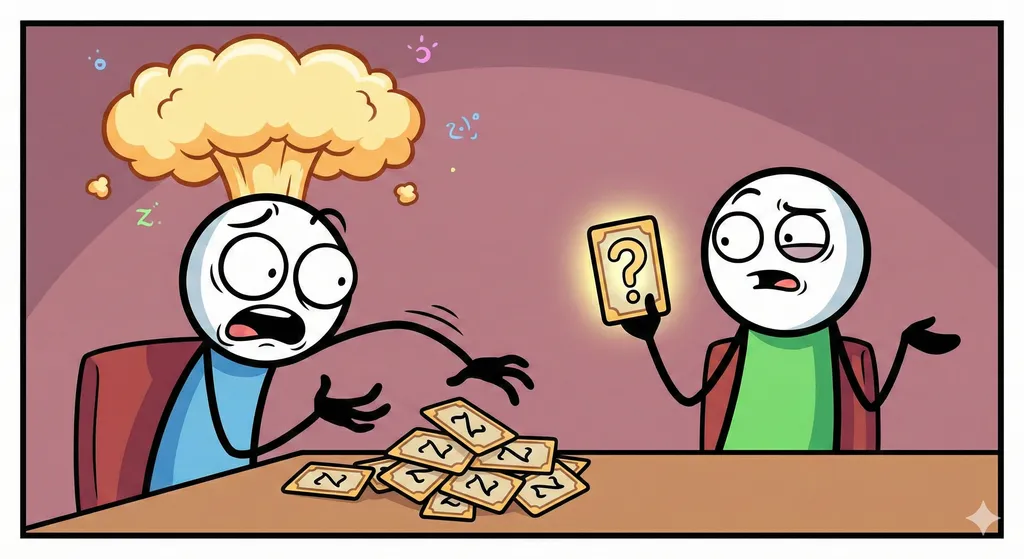
There's a subtle dread that creeps into the heart of any veteran player when a beloved game, whether it's a sprawling campaign in Dungeons & Dragons or a tightly balanced skirmish in Kill Team, starts to feel… solved. Not broken, mind you, but distilled to a predictable optimal path. This isn't a flaw in the game itself, but often a natural consequence of dedicated communities dissecting every mechanic. The problem, as we’ve seen in everything from the early days of *Machi Koro*’s notorious property order to the current meta debates in *Warhammer 40,000*, isn't merely about dominance; it’s about the erosion of meaningful player choice. When a game offers a single, undeniable optimal strategy, the joy of discovery and creative problem-solving dwindles.
The beauty of our hobby, especially in the TTRPG space, is its inherent malleability. Unlike a boxed board game, the rulebook for a game like *Pathfinder* or *Cyberpunk RED* is often seen less as scripture and more as a robust framework. When a 'solved' meta emerges—be it a dominant character build, an overpowered spell combination, or a specific army list that consistently outperforms all others—the community doesn't just despair. It innovates.
Consider the common 'nerfs' applied to certain character options. A GM might cap the number of times a particularly potent ability can be used per combat, or introduce a new failure condition to a spell that previously had none. This isn't arbitrary punishment; it's a surgical strike against the 'optimal' path, forcing players to diversify. On the flip side, 'buffs' can elevate underperforming options, breathing new life into forgotten archetypes or units. Imagine a homebrew rule that grants a bonus to a rarely used weapon type, suddenly making it a viable, thematic choice. This direct manipulation of the core mechanics, often refined through iterative playtesting at the table, shifts the balance, reintroducing genuine strategic decisions where only one previously existed. It’s the ultimate expression of player agency over the system itself, a constant, organic patch cycle driven by those who love the game most.
This tradition of tailoring the rules isn't a modern phenomenon; it's woven into the very fabric of tabletop gaming. From the earliest days of D&D's foundational texts, GMs were encouraged to make the game their own. This 'Rule Zero' ethos isn't just a suggestion; it's a core tenet, a fundamental pillar that distinguishes TTRPGs from their more rigid board game cousins. The shared experience around a table fosters a unique kind of collaborative storytelling, and the rules are merely the language we use to tell those stories. When a rule inadvertently stifles creativity or fun by funneling players into a single optimal path, the community instinctively seeks to reclaim agency.
This ongoing dialogue between designers and players, often mediated by the Game Master, forms a fascinating meta-narrative. Every homebrew rule, every community-sourced errata, every 'gentleman's agreement' about a problematic interaction, contributes to a living, evolving lore of play. It’s the story of how *we* play, just as much as it is the story of the characters we embody. This isn't about disrespecting the original design; it's about an intimate engagement with it, a testament to the depth of passion for the game world and its mechanics. It ensures that the game remains a vibrant, unpredictable experience, rather than a puzzle to be solved and then discarded.
For the health of any long-running tabletop game, this communal adaptation is not merely good; it’s essential. A 'solved' game, while perhaps a testament to its initial design elegance, ultimately becomes stale. It stifles player creativity, discourages experimentation, and can lead to player burnout. By empowering GMs and players to collectively tweak, expand, and even prune the rule set, we ensure longevity and replayability. It transforms the game from a static product into a dynamic platform for ongoing engagement.
The challenge, of course, lies in moderation and communication. A wild west of contradictory house rules can be just as detrimental as a stale meta. The best house rules are those developed collaboratively, communicated clearly, and playtested thoroughly. They arise from a shared understanding of a problem and a collective desire for a better table experience. When done well, these adaptations foster stronger communities, deepen player investment, and keep the unexpected alive. It’s a testament to the fact that the most powerful engine in tabletop gaming isn't printed on a page or coded into a VTT; it's the collective imagination and ingenuity of the players themselves. For GMs grappling with predictable encounters or players feeling railroaded by optimal choices, remember: the power to reshape your game, to reignite its spark, is already in your hands. The Crit Sheet's Guide to Homebrew Harmony
Top Pick: The Game Master's Book of Random Encounters
For GMs seeking to introduce unpredictability and break player routines.
Check Price on Amazon →Related Stories
Blades in the Dark's Brilliance: Three Mechanics Every TTRPG Needs
Delve into the genius of Blades in the Dark and its Forged in the Dark engine. We dissect three core mechanics that elevate narrative play and empower both GMs
Guilded Paths: A Cinematic TTRPG Vision Beyond the Screen
The Guild's crowdfunded film unveils 'Guilded Paths,' a TTRPG designed to extend its narrative universe. We dissect its innovative mechanics and lore, evaluatin
Aetherbound's Core: Skill, Talent, and Table Impact
Veridian Games' Aetherbound Chronicles introduces a nuanced distinction between learned skill and innate talent. We dissect how this mechanical separation impac