
The Verdant Void: When Elves Decide to Mill in Magic
A recent MTGGoldfish article reveals a groundbreaking Elf tribal strategy that leverages their traditional strengths for an entirely unconventional mill win condition. This deep-dive explores how this deck subverts expectations, twisting familiar mechanics and lore.
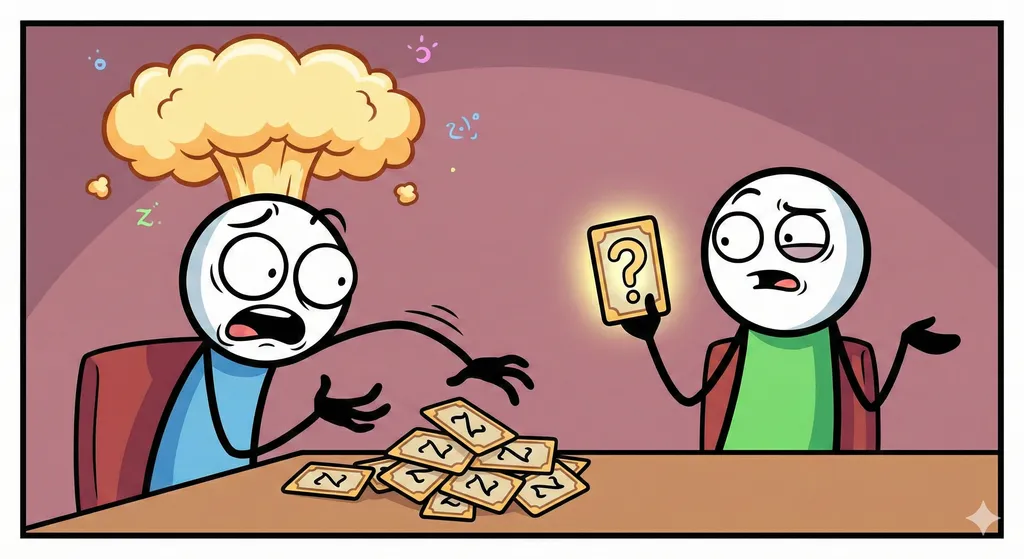
A recent Brewer's Kitchen article on MTGGoldfish showcased a truly out-of-left-field strategy for Magic: The Gathering, challenging long-held tribal conventions. For decades, players of Wizards of the Coast’s venerable card game have understood Elves to be the undisputed masters of mana acceleration and board presence, culminating in overwhelming combat damage or colossal X-spells. But what if those verdant legions were instead conscripted into an entirely different, more insidious war: the war of attrition against an opponent's library?
The revelation that Elves, the quintessential combat-oriented green tribe, could effectively mill an opponent sent a ripple through the community. This isn't a fringe strategy relying on a single silver-bullet card, but a synergistic engine that recontextualizes the very strengths of the Elf archetype. The core mechanic hinges not on direct Elf-based mill, but on Elves’ unparalleled ability to generate resources and flood the board. Imagine pairing a critical mass of mana-dorks and token generators with a card like Altar of the Brood, or perhaps a more recent design that triggers a mill effect for each creature that enters the battlefield under your control. The sheer volume of Elves hitting the field in a typical tribal build, often facilitated by cards like Ezuri, Renegade Leader or Elvish Archdruid, suddenly transforms into a relentless assault on the library. It's a classic case of resource conversion, where the traditional 'damage' output is simply redirected.
Consider the raw power of a well-tuned Elf deck: Llanowar Elves and Elvish Mystic provide early mana, leading into cards like Priest of Titania or Heritage Druid, which can generate absurd amounts of green mana. This mana fuels massive spells or allows for multiple creature spells per turn. Now, instead of casting a colossal Genesis Wave or an over-the-top Overrun effect, that mana can be funneled into repeatable mill effects, or simply trigger effects based on the sheer number of Elves entering the battlefield. The efficiency of the Elf engine makes this unexpected mill strategy remarkably consistent, turning what might seem like a jank combo into a legitimate threat in formats like Modern or even casual Commander.
Lore-wise, this strategy is delightfully subversive. Elves across Dominaria, Lorwyn, or Kaldheim are typically depicted as guardians of nature, masters of growth, and rarely dabble in the destructive, unmaking magic of mill. The act of 'milling' an opponent's library feels inherently unnatural for a creature type so deeply intertwined with life and verdant abundance. It’s a mechanic usually reserved for blue mages manipulating knowledge, or black mages embracing decay. This Elvish mill deck, therefore, isn't just a mechanical innovation; it's a narrative twist. Are these Elves driven by a desperate need to cleanse a corrupted land by erasing its very history? Or perhaps a darker, more pragmatic sect has arisen, understanding that the most potent form of destruction isn't physical, but existential? This unexpected mechanical intersection forces us to reconsider the established archetypes and imagine new facets to the deep lore of Magic’s planes.
At the table, this Elvish mill strategy feels like a revelation. It injects a fresh, unexpected angle into a tribal archetype that, while powerful, can sometimes feel predictable. Opponents will be forced to re-evaluate their threat assessment; no longer can they simply shore up their defenses against a tidal wave of combat damage. Now, every Elf on the board, every mana generated, every token created, could be contributing to their library's demise. This isn't just a 'gotcha' moment; it's a sustained, inevitable erosion that demands a different kind of interaction. It rewards players who understand the deep synergies of Magic and aren't afraid to break established conventions. It also offers a fantastic entry point for players who love tribal synergies but crave a win condition beyond the red zone.
For the Commander format especially, where Elves are already a powerhouse, this offers a compelling alternative to the ubiquitous Craterhoof Behemoth alpha strike. It encourages more diverse deck construction and provides a puzzle for both pilot and opponent to solve. While some might find losing to library depletion less satisfying than a combat defeat, the sheer audacity and mechanical elegance of leveraging Elven strengths for such an unconventional goal is undeniably captivating. It’s a testament to the community's endless creativity and the robust design space of Magic: The Gathering that even well-worn archetypes can still surprise us.
Top Pick: The Lord of the Rings: Tales of Middle-earth Commander Decks
Excellent pre-constructed decks for new and veteran Commander players
Check Price on Amazon →Related Stories
Angels Ascendant: The Seraph's Impact on Magic's Meta
A new angelic legend has emerged from the upcoming 'Aetherium Echoes' set, promising to reshape white-based strategies. The Seraph of the Divine Chorus offers b
Beyond the Bloom: Redefining Commander Value at $45
MTGGoldfish's latest collection of 45 Commander decks under $45 challenges the notion of budget play. This initiative highlights accessible entry points and cre
TMNT Crash the MTG Meta: Pizza Power or Corporate Play?
Wizards of the Coast's latest Universes Beyond drop features the Teenage Mutant Ninja Turtles, igniting 'decklist drama' and debate. We dissect the mechanics an