
UA Villainy: Beyond Hit Points – D&D 5e's Evolving Antagonists
Wizards of the Coast's latest Unearthed Arcana offers novel tools for D&D 5th Edition GMs to craft truly memorable villains. We dissect the mechanics, lore implications, and table impact of these crucial additions.
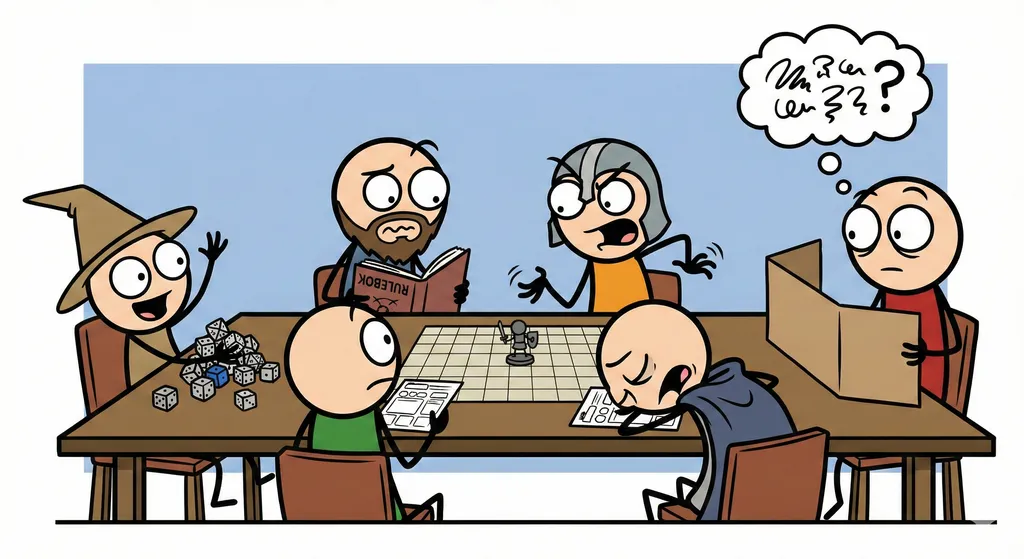
The latest Unearthed Arcana drop from Wizards of the Coast, a recent livestream revealing insights into D&D 5th Edition's future, has presented Dungeons & Dragons Game Masters with a fascinating suite of tools: 'Villainous Options.' This isn't just another batch of monsters; it's a structural reimagining of how antagonists function at the table, aiming to elevate boss encounters beyond mere slugfests.
For too long, the D&D 5th Edition paradigm for high-level antagonists has often boiled down to a bloated stat block with more hit points and higher damage output. While Legendary Actions and Legendary Resistances were a welcome step, they often felt like band-aids on a deeper design challenge: how to make a single, powerful foe feel dynamic and truly threatening against a well-oiled party. This Unearthed Arcana appears to tackle that head-on with what it terms 'Mastermind Tactics' and 'Escalation Triggers.'
Mastermind Tactics introduce a resource pool, akin to a villain's personal pool of 'plot points,' which can be spent to activate unique, scenario-altering abilities. Imagine a necromancer spending a point to instantly raise a cadre of skeletal archers from nearby corpses, or a cunning archfey using one to teleport the entire party into a disorienting illusion. These aren't just spell slots; they are narrative actions tied directly to the villain's identity and goals, making each encounter a puzzle rather other than just a combat. The proposed system suggests these points refresh under specific conditions, perhaps at the start of a new round, or when a specific narrative beat is hit, like 'when a Minion is defeated.' This encourages GMs to build layered encounters, where the villain isn't alone but utilizes their environment and subordinates strategically.
Then we have Escalation Triggers. These are pre-defined conditions that, when met, fundamentally shift the encounter's dynamics. Perhaps when the villain drops below half hit points, their true form is revealed, granting new resistances and offensive capabilities. Or, if a specific objective, like 'destroying the arcane focusing crystal,' is achieved by the players, the villain's 'Desperation' trigger activates, unleashing a final, devastating attack or a desperate escape attempt. This moves away from the static 'damage race' and into a more cinematic, multi-stage confrontation, demanding adaptability from players and GMs alike. It injects a much-needed narrative ebb and flow into what can sometimes be predictable high-stakes battles. The sheer tactical depth this offers GMs to craft truly memorable antagonists is significant.
Beyond the dice rolls and stat adjustments, these mechanics are a potent storytelling device. A villain isn't just 'a powerful wizard'; they are now a tactical force with a distinctive modus operandi encoded directly into their abilities. A 'Mastermind Tactic' like 'Corrupt the Innocent' immediately tells the players about the villain's moral alignment and preferred methods, far more effectively than a mere alignment descriptor. An 'Escalation Trigger' that turns a seemingly defeated cult leader into an avatar of their dark god isn't just a combat phase change; it’s a revelation of the cult's true power, deepening the lore mid-combat.
This design philosophy encourages GMs to think of their villains as characters with unique strategic profiles, not just damage sponges. It allows for villains whose power isn't just raw force, but cunning, manipulation, or environmental mastery. Even in the context of the rumored D&D sci-fi settings – imagine a cybernetic overlord using 'Mastermind Tactics' to hack player implants or activate automated defenses, or an alien entity whose 'Escalation Trigger' is the summoning of a starship from orbit. These tools are flexible enough to transcend genre, making any antagonist feel more purposeful and integrated into the world. The shift empowers GMs to weave deeper narratives directly through the combat encounter itself, turning a battle into a living piece of the setting's lore.
This Unearthed Arcana, even in its early stages, feels like a significant step forward for D&D 5th Edition. It directly addresses a long-standing criticism regarding the often-flat nature of high-CR encounters. For Game Masters, these 'Villainous Options' provide a robust framework to design encounters that are less about attrition and more about strategic engagement and narrative progression. Players will find themselves facing foes who feel genuinely intelligent, adaptive, and dangerous, forcing them to think beyond simply reducing hit points. It fosters a more dynamic, cinematic table experience, where every choice, both by players and the GM, carries weight. This isn't just about making villains tougher; it's about making them smarter and more memorable. It's about giving the GM more levers to pull than just 'I attack again.' The ability to sculpt multi-stage battles with built-in narrative beats is invaluable. This is the kind of mechanical innovation that truly empowers creative Game Mastering. For those looking to elevate their campaigns, this UA is a goldmine. The Dungeon Master's Guide
Top Pick: Fizban's Treasury of Dragons
Its approach to unique dragon lairs and actions aligns perfectly with the dynamic villain design principles explored in this UA, offering excellent inspiration for GMs.
Check Price on Amazon →Related Stories
Ravenloft's Shadow Deepens, Paizo Unleashes New Terrors
The latest EN World podcast reveals significant updates to D&D 5th Edition's Ravenloft, alongside Paizo's venture into a dedicated horror RPG. We dissect what t
Ravenloft's Grimoire of Dread: Unpacking The Horrors Within
Wizards of the Coast's latest Ravenloft entry promises deeper dread. We dissect its new mechanics and lore, evaluating its impact on your 5th Edition horror cam
UA Villainy Unleashed: Dark Paths for D&D's Anti-Heroes
Wizards of the Coast has dropped another Unearthed Arcana, 'Villainous Options 2,' expanding morally complex player choices for Dungeons & Dragons 5th Edition.