
Unpacking GW's Whispers: Conspiracies and the Tabletop Truth
A recent Spikey Bits exposé revealed former Games Workshop employees' takes on popular Warhammer conspiracies. We delve into how these revelations impact the lore, community trust, and your actual gameplay experience.
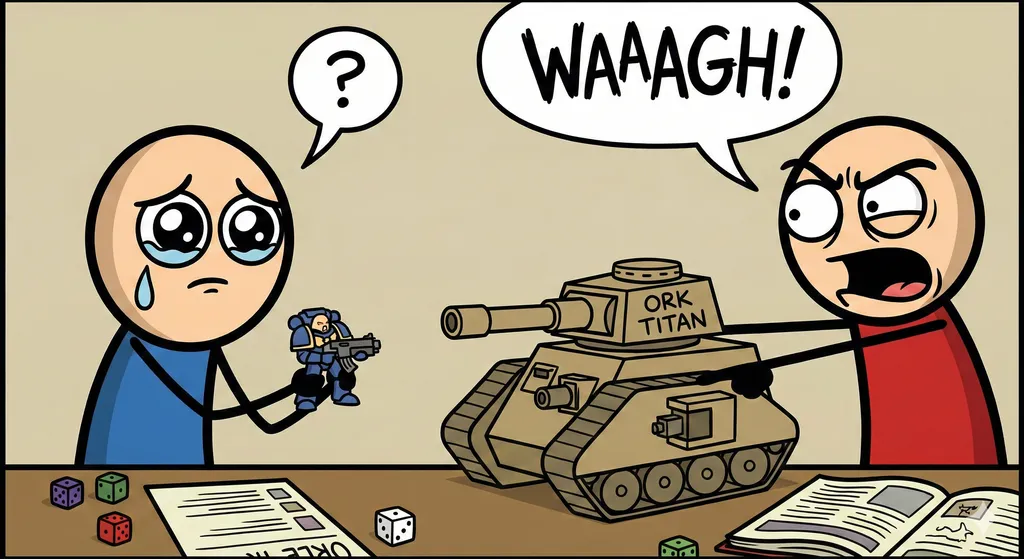
The recent exposé from Spikey Bits, detailing former Games Workshop employees' insights into longstanding Warhammer conspiracies, has sent a ripple through the community. For us at The Crit Sheet, this isn't just juicy gossip; it's a fascinating look at the meta-narrative that shapes how we interact with Games Workshop's vast universes, particularly Warhammer 40,000 and Age of Sigmar, and how those whispers translate to our tabletops.
When we talk 'mechanics' in this context, we're not discussing dice rolls or stat blocks. We're examining the *social mechanics* of a gaming community and the *information economy* that underpins it. Conspiracies, whether true or false, are powerful drivers of engagement. They generate discussion, speculation, and a sense of shared, 'insider' knowledge. For a publishing behemoth like Games Workshop, the opacity around decisions – be it lore development, model releases, or even competitive rules changes – often fosters an environment where theories flourish.
Consider the 'Squats are coming back' myth, now partially vindicated by the Leagues of Votann. Or the persistent belief that certain factions are deliberately neglected for strategic sales reasons. These aren't just idle thoughts; they influence player investment. If a player believes their preferred army is intentionally sidelined, it affects their willingness to purchase official Games Workshop products, engage with new lore, or even attend events. The *mechanic* here is trust: the less transparent the publisher, the more the community fills the void with its own narratives. For Game Masters running Warhammer 40,000 TTRPGs or even narrative campaigns in the skirmish game Kill Team, understanding this community 'crunch' is vital. These shared fan theories, regardless of official debunking, become part of the collective consciousness, influencing player expectations and potential plot hooks.
What makes these real-world conspiracies so compelling within the Warhammer ecosystem is how perfectly they mirror the in-universe lore. Warhammer 40,000 is a setting *defined* by unreliable narrators, lost histories, and the deliberate suppression of truth. The Imperium of Man functions on a galaxy-spanning conspiracy of silence, where ancient knowledge is heresy, and the true nature of the Emperor is a carefully guarded secret. Chaos thrives on whispers and corruption, turning truth into propaganda and doubt into damnation. Even the stoic Aeldari harbor millennia-old secrets, and the Necrons awaken to a shattered memory of their own past.
This thematic resonance is no accident. The very fabric of the setting encourages a certain paranoia, a questioning of official narratives. So, when former GW employees confirm or deny things like 'the Emperor is secretly a Chaos God' (a delightful bit of fan theory) or explain the internal logic behind the 'Squats' return, it's not just breaking the fourth wall; it's deepening our appreciation for the narrative framework. The real-world 'conspiracy' of the publisher becomes a meta-commentary on the in-universe 'conspiracy' of the setting. It reminds us that even in a world of space marines and daemons, the truth is often fragmented and manipulated.
So, what does this mean for your tabletop? For the diligent Game Master or narrative player, these revelations are a treasure trove. Knowing which 'conspiracies' have a kernel of truth, or even just a strong community belief, allows for richer worldbuilding. Imagine a Warhammer 40,000 RPG where players stumble upon a redacted Imperial document that *seems* to confirm a long-held fan theory about the Adeptus Mechanicus's true agenda. The communal knowledge of these 'conspiracies' adds a layer of depth and inside humor that enhances immersion.
On the other hand, a complete debunking of a beloved theory might feel a bit deflating for some. Part of the fun of a rich setting is the speculative space it provides. However, what these former employees offer isn't just 'truth' but *perspective*. It's a glimpse behind the curtain, demystifying some of the corporate decisions and human elements that shape our hobby. This can foster a healthier community, replacing frustrated speculation with understanding. It reminds us that even the most titanic universes are built by people, with their own internal logic and constraints. Ultimately, whether true or false, these discussions reinforce the vibrant, engaged nature of the Warhammer community – a community that loves its lore so much, it tries to fill every gap, even those in the publisher's boardroom. That energy, that passion for the unknown, is what truly defines the table feel.
Top Pick: Warhammer 40,000 Core Rulebook
Essential foundation for understanding the setting's vast lore and myriad factions.
Check Price on Amazon →Related Stories
Squad Marks Future-Proofs Your 40k Terrain for 11th Edition
Squad Marks has released an essential 11th Edition Warhammer 40,000 terrain conversion guide, ensuring your existing 10th Ed layouts remain battle-ready. This c
The Red Terror's Maw: Tyranid Rules Bring Surgical Brutality
Games Workshop has unveiled new rules for The Red Terror in Warhammer 40,000, showcasing its terrifying 'Swallow Whole' ability. This unique Lictor variant prom
The Forge vs. The Printer: GW's Evolving Stance
Games Workshop's latest announcements hint at a shifting strategy regarding 3D printing. We dissect the implications of their new Armageddon releases and promot