
Warhammer 40k Objectives: Terrain Integration Elevates Tactical Play
Games Workshop is overhauling objective rules for the new Warhammer 40k edition, embedding them directly into battlefield terrain. This move promises to streamline gameplay and deepen tactical engagement, transforming how players approach the strategic Imperium.
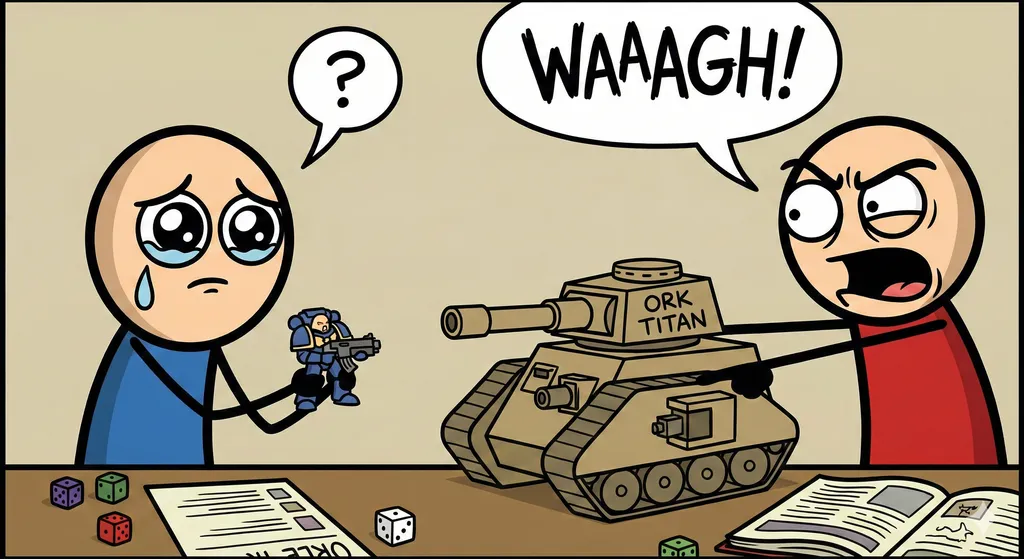
For too long, the sacred battlefields of the 41st Millennium have been marred by a fundamental dissonance: abstract objective markers floating incongruously amidst painstakingly crafted terrain. That era, it seems, is drawing to a close. Games Workshop has announced a significant evolution for Warhammer 40,000's upcoming edition, a change that sees objective rules rolled directly into battlefield terrain. This isn't just a quality-of-life update; it’s a profound re-envisioning of the tactical landscape, and frankly, it’s about time.
Let’s dissect the crunch. In current and past editions, objective markers were often simple tokens, placed according to mission parameters, separate from the physical terrain. A unit held an objective if it was within a certain radius, irrespective of whether that objective was in open ground, behind a wall, or atop a ruined structure. This created moments of strategic absurdity, where a single infantry model might 'control' a vast, featureless expanse, or an objective token could be placed in a way that felt divorced from the narrative flow of the battle. The new paradigm, as described, integrates these objectives directly with terrain pieces. Imagine a vital comms relay, a crashed void-ship segment, or a fortified bunker *being* the objective. It’s no longer an abstract point on the board, but a tangible, defensible, and visually impactful focal point.
Mechanically, this means terrain placement during setup – already a crucial phase – becomes even more pivotal. Each piece of objective terrain will likely come with its own set of rules, perhaps granting cover, impeding movement, or even having unique interactive elements. A unit attempting to seize an objective will now inherently be interacting with a piece of terrain, inheriting its benefits and drawbacks. This streamlines the rule set; rather than two separate systems for 'objective holding' and 'terrain interaction,' they become one cohesive whole. No more asking if your unit is *on* the objective, but rather, is it *controlling this specific piece of terrain*? This could significantly impact unit mobility, line of sight, and the efficacy of various unit types, rewarding nuanced positioning over brute force.
From a lore perspective, this change is nothing short of brilliant. The battlefields of Warhammer 40,000 are not pristine arenas; they are shattered worlds, industrial ruins, and alien deathscapes. Objectives are not arbitrary points; they are vital strategic strongholds, critical supply depots, or sites of arcane power. By fusing objectives with terrain, Games Workshop grounds the abstract concept of 'victory conditions' firmly within the grimdark reality of the setting. When you command your Terminators to seize a 'strategic objective,' you're no longer picturing a plastic disc; you're envisioning them fighting tooth and nail to secure a collapsed Administratum spire or a crucial plasma generator. This enhances immersion tenfold, making every tactical decision feel more impactful and narratively resonant. It also provides fantastic opportunities for hobbyists to build thematic objective terrain, turning the battlefield itself into a storytelling canvas. Imagine a bespoke objective piece like a Adeptus Mechanicus Combat Patrol patrol fighting over a relic from the Dark Age of Technology.
So, is this good for the game? Unequivocally, yes. This is a masterful stroke that addresses several long-standing critiques of Warhammer 40,000's gameplay. It elevates terrain from a mere obstacle or cover provider to a central strategic element. It reduces cognitive load by unifying rulesets. It enhances the visual appeal of the game, making every board feel more dynamic and less like a static backdrop for token placement. For competitive players, this will necessitate a complete re-evaluation of deployment strategies and unit synergies. For narrative players, it offers a richer, more immersive experience. This change promises a more elegant, more tactical, and ultimately, more engaging 40k experience. We're not just fighting *on* a battlefield anymore; we're fighting *for* it.
Top Pick: Games Workshop's Battlezone: Fronteris – STC Hab-Bunker
Reason: An excellent multi-piece terrain kit that exemplifies a functional, thematic objective, offering both cover and strategic value.
Check Price on Amazon →Related Stories
The Eleventh Hour: Decoding Warhammer 40K's Next Edition
Games Workshop has begun unveiling the mechanics for the highly anticipated 11th Edition of Warhammer 40,000. We dissect the revealed rules, examining their imp
Primarch Resurgence & Points: Warhammer 40k's Shifting Tides
Spikey Bits reports suggest a seismic shift for Warhammer 40,000 with rumored Primarch returns, new Armageddon boxes, and critical points adjustments. This deep
10th Ed Meta: T'au's Ascendance & Imperial Surge
Goonhammer's "Competitive Innovations" report highlights T'au's continued dominance in 10th Edition Warhammer 40,000. Surprising strong showings from Salamander