
WotC Explores New Casual MTG 1v1 Format
Mark Rosewater reveals Wizards of the Coast is exploring a novel high-variance, casual two-player format for Magic: The Gathering. This potential new way to play aims to offer unpredictable, fun duels distinct from competitive scenes.
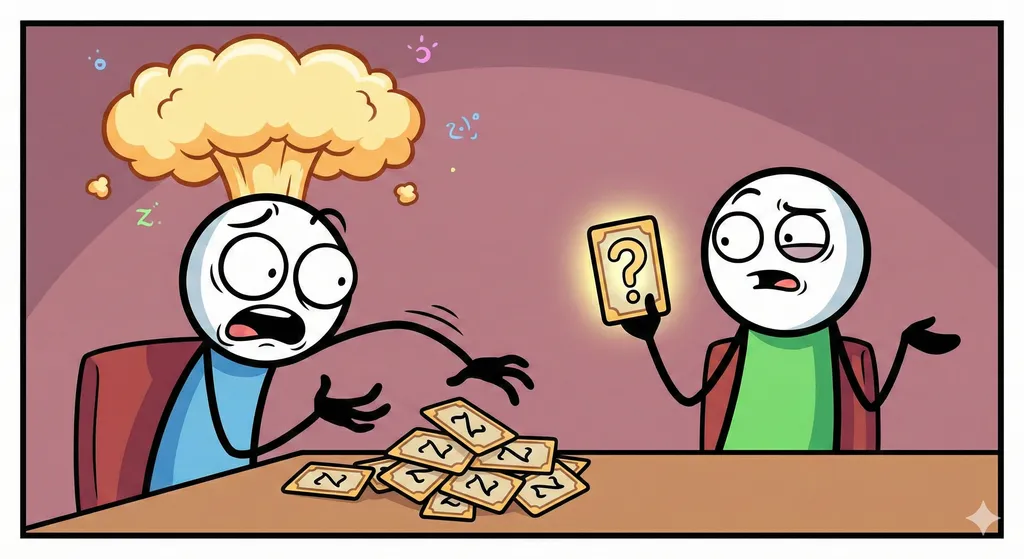
The announcement from Magic: The Gathering's head designer, Mark Rosewater, regarding Wizards of the Coast's exploration of a new high-variance, casual 1v1 format has set the community abuzz. For veterans of the game, this isn't just another product announcement; it's a potential recalibration of the fundamental player experience, a bold step into uncharted design space for the venerable TCG.
Let's cut to the crunch. What does "high variance" truly mean for a 1v1 format in Magic? It suggests a deliberate move away from the hyper-optimized, consistent lines of play that dominate competitive Standard, Modern, or Legacy. We're likely looking at mechanics designed to disrupt deterministic game states, perhaps through smaller deck sizes that increase the probability of drawing specific cards but also make deck composition more volatile. Imagine a format where mana screw and flood are mitigated by a new resource system, but in their place, we encounter a shared "Chaos Deck" that introduces random, game-altering events each turn, or a unique mulligan rule that encourages keeping riskier hands. Perhaps it's a singleton format where deck construction emphasizes unique interactions over raw power, or even a system where certain card types gain temporary, unpredictable abilities. The goal, ostensibly, is to prioritize memorable, swingy moments over finely tuned engines, making each game a unique narrative rather than a race to execute a perfect sequence.
From a lore perspective, a high-variance format could be an evocative return to Magic's roots, when the planes were wilder, and the magic itself less refined. Picture two nascent planeswalkers, perhaps just discovering their spark, clashing in an untamed corner of the Multiverse. Their spells aren't perfectly choreographed sequences; they're raw bursts of power, fueled by instinct and a touch of chaotic luck. This format could lean into the inherent unpredictability of certain planes or creature types – the madcap inventions of a goblin artificer, the volatile elemental surges of Zendikar, or the sheer, unbridled power of a dragon's breath. It's less about strategic mastery and more about embracing the raw, untamed energy of the Multiverse, where the story of the game unfolds organically through surprising twists and turns, rather than through calculated advantage. It’s the perfect backdrop for players who love the narrative potential of Magic, rather than just the mathematical optimization.
So, what's the verdict for the table? Is this good for the game? The potential upsides are significant. Firstly, accessibility. A casual 1v1 format, particularly one with built-in variance, could be an excellent onboarding ramp for new players, reducing the pressure to learn complex meta-games or invest heavily in competitive staples. It could offer a "kitchen table plus" experience, providing structure and novelty without the cutthroat environment of competitive play. For veterans, it presents a fresh puzzle, a new way to interact with their collections and experience the game, perhaps even revitalizing cards that rarely see play in optimized environments. Imagine a format that makes cards like [[Chaos Orb]] spiritually relevant again, or one that elevates the whimsical interactions found in sets like `Jumpstart 2022`. This new design space could lead to genuinely innovative mechanics and product lines, keeping the game vibrant and preventing format fatigue.
However, the path is fraught with peril. Magic: The Gathering already boasts a plethora of formats, from Commander/EDH to Modern to Pauper. Introducing another could further splinter the player base, making it harder for communities to coalesce around specific play styles. The design challenge itself is immense: how do you balance "high variance" with "fun"? Too much randomness can quickly devolve into frustration, making games feel less like a skill test and more like a dice roll. The sweet spot lies in creating meaningful choices within a chaotic framework, allowing players to adapt to unpredictability rather than merely being victims of it. If executed well, this format could be a triumph, offering a much-needed alternative to the increasingly competitive landscape of 1v1 Magic. If not, it risks becoming another niche experiment, quickly forgotten. Ultimately, the success will hinge on Wizards of the Coast's ability to truly embrace the "casual" and "high variance" tenets without sacrificing the strategic depth that defines Magic.
Top Pick: Commander Preconstructed Decks
An accessible entry into varied, casual Magic play.
Check Price on Amazon →Related Stories
Bilbo's Bold Move: The Hobbit Who Shook Vintage Magic
The recent reveal of Bilbo, Ring-Bearer of the Shire, for Magic: The Gathering's Vintage format has sent ripples through the competitive scene. This unassuming
cEDH Featherweights: The Nuance of Color in Competitive Commander
Star City Games' 'The Spike Feeders' highlights a critical cEDH meta-game: the clash between focused mono-color aggression and adaptive multi-color strategies.
Magic's Fantasticar: A Rare Admission of Design Error
A play designer for Magic: The Gathering recently acknowledged a significant design misstep with the Fantasticar card. This candid admission offers a rare glimp