
Beyond Tropes: Perfecting Genre Detail at Your TTRPG Table
Gnomecast 239 from Gnome Stew explores the crucial, often-overlooked details that define a TTRPG genre. We dissect how these granular elements transform broad strokes into truly immersive play experiences for GMs and players alike.
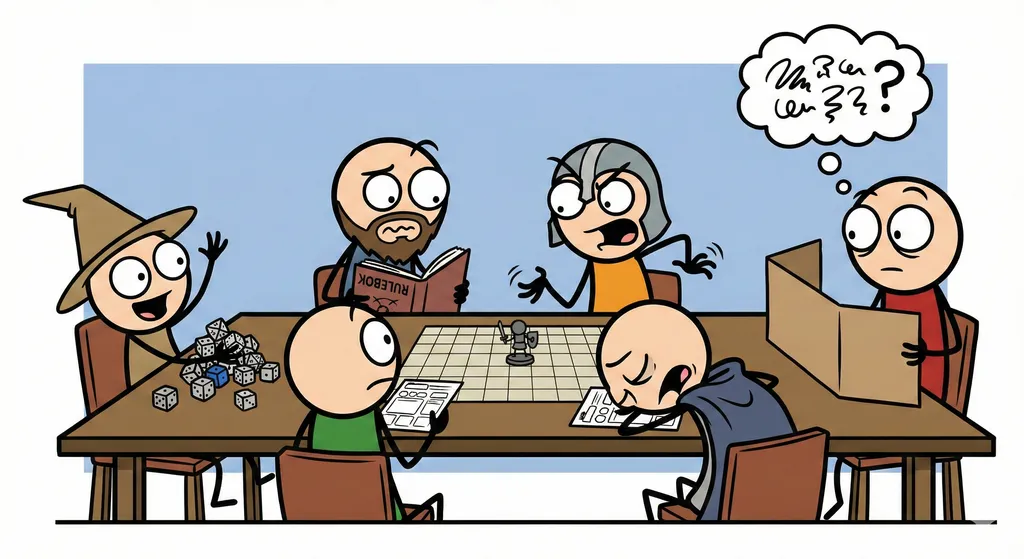
The latest Gnomecast 239 from the venerable Gnome Stew, 'Perfecting Genre Details,' isn't just another podcast episode; it's a masterclass in the craft of immersive TTRPG worldbuilding. Ang, Jared, and Carl Lehmann cut through the broad strokes, urging GMs and players alike to dig into the granular, often-overlooked elements that truly define a setting. This isn't about mere window dressing; it's about the very fabric of verisimilitude at the table, transforming generic backdrops into living, breathing worlds that resonate with genre authenticity.
To truly 'perfect genre details' isn't about adding more lore dumps; it’s about a deliberate, almost surgical approach to presentation and player interaction. Mechanically, this manifests as a Game Master’s commitment to filtering descriptions, NPC reactions, and environmental cues through the chosen genre’s specific lens. Consider a gritty cyberpunk setting. It's not enough to say 'you’re in a city.' The crunch of genre detail means describing the acrid tang of synth-fuel exhaust, the flickering neon signs casting garish reflections on rain-slicked chrome, the omnipresent hum of data traffic, and the casual brutality of corporate enforcers. It's the weight of the commlink in your hand, the specific slang used by street gangs, the cost of a basic stim, or the pervasive sense of surveillance. For players, the 'mechanic' of engaging with these details involves making choices informed by this specific context. Instead of asking 'where's the inn?', a player in a cosmic horror game might ask 'where can we find shelter that isn’t already tainted?'. In a swashbuckling pirate game, it’s not just 'do I hit him?', but 'do I parry with a flourish, aiming for his hat, or go for the quick, dirty stab that might spoil my reputation?' The GM's role becomes one of a curator, selecting and emphasizing details that reinforce the genre, and consistently reacting to player actions within that framework. This active filtering and consistent application are the true mechanics of genre perfection.
The 'lore' of genre details transcends mere historical facts or character backstories; it's the cultural, technological, and environmental minutiae that permeate every aspect of the setting. In high fantasy, this might be the specific etiquette for addressing a fae lord, the subtle differences in elven dialects, the scent of a magically cultivated herb garden, or the intricate carvings on a dwarven stronghold that tell a story of ancient feuds. It’s the worn, smooth texture of a wizard's spellbook, not just its contents.
For a pulpy space opera, the 'fluff' could be the specific, slightly-off humanoids populating a cantina, the clunky but beloved starship controls, the ubiquitous, slightly-too-loud jingle for a galactic hyper-noodle chain, or the distinct hum of a plasma rifle charging. It’s the sense of frontier lawlessness juxtaposed with ancient, forgotten empires. In a post-apocalyptic wasteland, it's the specific brands of canned goods, the improvised repairs on every vehicle, the scarcity of clean water, the tribal markings of marauders, or the eerie silence broken only by the wind and distant, unknown howls. These aren't plot points; they are the texture, the atmosphere, the unspoken rules that define the world and make it feel lived-in and distinct.
So, what does this commitment to granular detail mean for the table? It means immersion deepened to a palpable degree. Generic fantasy becomes 'Grimdark Saga of the Bleeding Crown.' Vague sci-fi transforms into 'Neo-Tokyo Underbelly: A Cyber-Thriller.' Players aren't just moving pieces on a map; they are inhabitants of a world with specific rules, specific dangers, and specific opportunities. This level of detail fosters genuine player agency, as their decisions are informed by a richer, more specific context. They no longer need to meta-game; the world itself provides the cues.
Furthermore, it creates memorable moments. The specific brand of synthetic ramen a character eats, the unique flicker of a haunted gaslamp, the peculiar dialect of a specific alien race – these small touches are what players recall years later. They build a shared understanding of the world that transcends simple plot points, leading to a richer collaborative storytelling experience. It elevates a game from merely 'fun' to genuinely 'unforgettable,' ensuring that your campaign leaves a distinct imprint, rather than blending into the background of countless other adventures. This approach is not about more work, but about smarter work, focusing on the quality and consistency of atmospheric elements to truly transport everyone at the table.
Top Pick: Shadowdark RPG
Its OSR principles inherently encourage detail-rich, dangerous worlds through evocative descriptions and player engagement with the environment.
Check Price on Amazon →Related Stories
Mastering the Transfer: Unpacking Gnome Stew's Rule Teaching Wisdom
Gnomecast 238 delves into the art of teaching TTRPG rules, offering crucial insights for GMs. We examine how effective onboarding shapes player engagement and n
Obsidian: A Deep Dive into TTRPG Campaign Management
Obsidian, the versatile knowledge base, is rapidly becoming an indispensable tool for TTRPG Game Masters. We explore how this powerful software transforms campa
Beyond Generic: Crafting Culturally Rich Names On The Fly
Campaign Mastery's 'Names On The Fly' offers GMs a sophisticated method for instant, culturally relevant naming. This technique elevates improvisation, deepenin