
Mastering the Transfer: Unpacking Gnome Stew's Rule Teaching Wisdom
Gnomecast 238 delves into the art of teaching TTRPG rules, offering crucial insights for GMs. We examine how effective onboarding shapes player engagement and narrative flow.
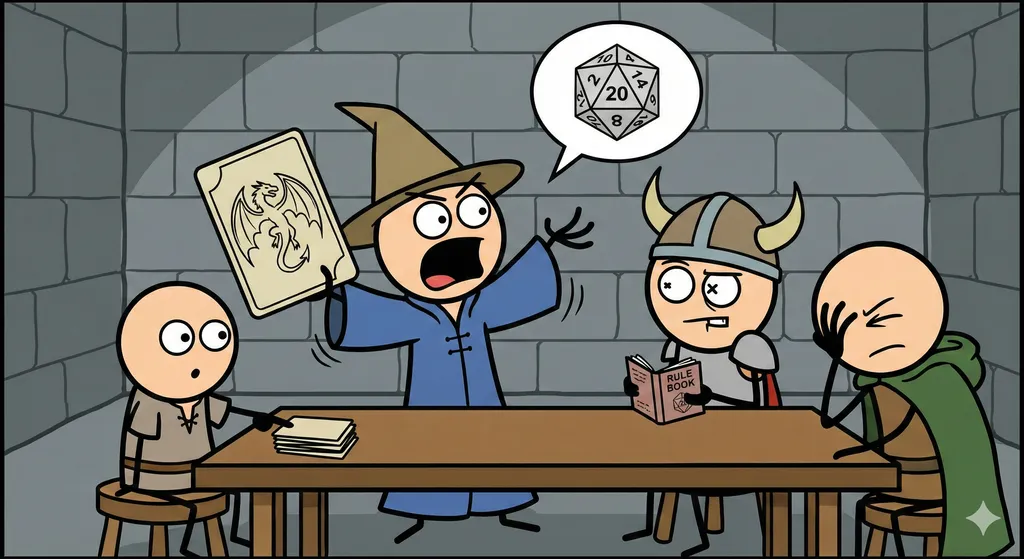
“Gnomecast 238 – Teaching New Rules” from Gnome Stew offers a vital service to every Game Master: a strategic dissection of how to effectively introduce new systems, mechanics, and even entire game worlds to your players. This isn't just about reciting page numbers; it's about engineering understanding, fostering engagement, and ensuring the shared narrative space thrives rather than stumbles under the weight of unfamiliarity.
The “Gnomecast” crew rightly emphasizes that rule teaching isn't a monolithic act. It shifts dramatically between the ephemeral nature of a one-shot and the unfolding saga of a campaign. For one-shots, the imperative is speed and utility. Players need just enough crunch to make informed decisions and enjoy the immediate narrative arc. This often means pre-generated characters, streamlined explanations of core dice mechanics (e.g., “roll d20, add modifier, beat DC”), and a 'learn-by-doing' approach for more complex interactions. The GM becomes less a lecturer and more a benevolent facilitator, guiding actions and explaining consequences in real-time.
Campaigns, however, demand a different pedagogical strategy. Here, the goal is retention and mastery. Players must internalize the rules not just for a single session, but for dozens, even hundreds, of hours of play. This calls for incremental introduction. Perhaps a 'rules primer' session, or drip-feeding mechanics as they become relevant. The concept of a shared “GM screen” (not the physical barrier, but a common understanding of key tables and procedures) is critical. Consider the impact of a well-designed player handout, distilling crucial abilities, common actions, and the game's core loop onto a single, accessible sheet. This reduces cognitive load and empowers players to engage with the system proactively, rather than constantly querying the GM. The podcast touches on the value of “Libra Valoris Edge Cases,” which, for us at the table, means anticipating those tricky interactions and having a clear, concise ruling prepared, or better yet, a simple framework for resolving them collaboratively. Sly Flourish's efficient prep methods emphasizes exactly this kind of proactive, player-centric preparation.
While the “Gnomecast” primarily focuses on the *how* of teaching, the deeper resonance lies in its impact on the *what* – the game's lore and setting. When rules are clearly understood, they cease to be opaque barriers and transform into the very fabric of the world. A player who grasps the nuances of a skill check system or the tactical implications of a combat round isn't just manipulating numbers; they are interacting with the simulated reality of the game. They understand *why* their character might struggle to pick a master lock, or *how* their spell's area of effect interacts with the dungeon corridor. This understanding fosters immersion. The rules, rather than being an external system, become an internal logic, supporting the narrative rather than interrupting it. It allows players to make choices that feel authentic to their characters and the world, because they comprehend the mechanical language the world speaks. Without this foundation, the setting can feel arbitrary, and character actions can seem disconnected from their intended consequences, eroding the very suspension of disbelief we strive to build.
So, is this advice good for the game? Absolutely. Effective rule teaching isn't just a courtesy; it's a cornerstone of a healthy TTRPG table. When players feel confident in the rules, the pacing of the game improves dramatically. Less time is spent on clarification, more on action and role-playing. Player agency flourishes because choices are made from a place of understanding, not guesswork. This reduces GM burden, allowing them to focus on improvisation, narrative development, and adjudicating the unique emergent scenarios that make TTRPGs so special. The “Gnomecast” discussion illuminates the path towards a table where mechanics are transparent, lore is deeply felt, and the shared story flows unimpeded. It's about empowering everyone at the table to be an active participant in the grand collaborative fiction, rather than a passive observer struggling with an instruction manual.
Top Pick: Sly Flourish's Return of the Lazy Dungeon Master
For streamlining GM prep and focusing on what truly matters at the table, including efficient rule delivery.
Check Price on Amazon →Related Stories
Obsidian: A Deep Dive into TTRPG Campaign Management
Obsidian, the versatile knowledge base, is rapidly becoming an indispensable tool for TTRPG Game Masters. We explore how this powerful software transforms campa
Abyssal Echoes: D&D 5e's Deep Dive Into Submerged Mechanics
Mythic Forge Games' Abyssal Echoes promises to transform aquatic D&D 5e encounters. We dissect its innovative rules for pressure, breath, and movement, and how
Hasbro's AI Studio: A Glimmer or a Glitch for D&D?
Hasbro, owner of Dungeons & Dragons, has launched an AI studio to license its characters. This move ignites a critical discussion on the future of TTRPG content