
D&D's Dark Turn: Villainous Feats Unleash New Character Depth
Wizards of the Coast's latest D&D playtest introduces 'villainous feats,' a bold mechanical step towards nuanced character development. We analyze how these new options could reshape player agency and narrative at your table.
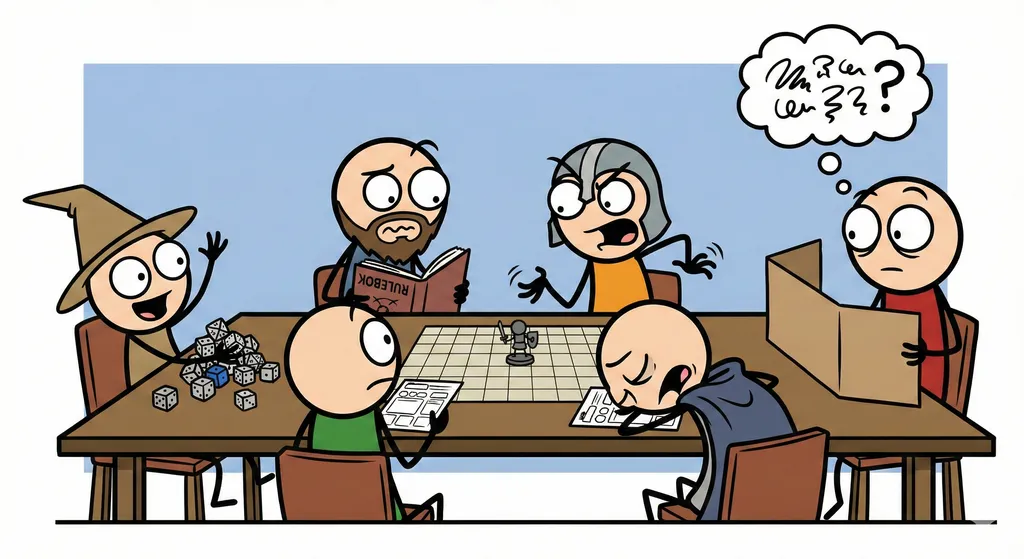
The latest Unearthed Arcana from Dungeons & Dragons, courtesy of Wizards of the Coast, has dropped a truly intriguing concept onto our tables: 'villainous playtest feats.' This isn't just another numerical tweak; it's a design choice that signals a deeper exploration into character identity and the grey areas of morality within the 5th Edition ruleset.
While the full scope of these 'origin feats' is still unfolding, the very notion of 'villainous' options suggests a departure from the traditionally heroic bent of D&D character progression. My read suggests these feats are intended to be more akin to narrative hooks baked directly into a character's mechanical identity, potentially granting unique abilities that come with moral compromises or require specific, morally dubious actions to activate or maintain. Unlike a standard feat like Great Weapon Master, which offers a clear combat trade-off, a 'villainous' feat might grant a bonus to intimidation checks against a specific creature type, but only after you've committed a heinous act against that creature's kin, perhaps even imposing a temporary 'taint' condition. Or consider a boon that lets you siphon life force from a fallen foe, but leaves a visible, corrupting mark on your character – a persistent necrotic aura or a disadvantage on Charisma checks with good-aligned NPCs. This moves beyond mere alignment choices and into active, *mechanical* reinforcement of a darker path, forcing players to confront the consequences of their power. The implications for character builds are immense, allowing for anti-heroes and even outright antagonists to feel mechanically supported, rather than purely roleplay-driven. Of course, the accompanying 'Epic Boons' mentioned in the playtest still feel like they're in early alpha, needing significant refinement to truly shine, but the villainous feats hold immediate, compelling promise.
From a lore perspective, these feats offer rich veins for worldbuilding and character backstory. No longer is a morally ambiguous character simply 'chaotic neutral' on their sheet; their very progression path can reflect a pact made with a shadowy entity, a traumatic event that warped their soul, or a calculated decision to embrace forbidden power. This allows players to truly embody characters like a pact-breaking warlock who gains power through the suffering of others, or a rogue whose knack for finding secrets extends to twisting truths for personal gain, all rooted in a tangible mechanical choice. Imagine a character who took the 'Shadow's Embrace' feat after witnessing their family's demise, gaining the ability to melt into darkness but at the cost of their own empathy. This isn't just flavor text; it's a living, breathing part of the narrative woven into the fabric of the character, providing a compelling rationale for their actions within any D&D campaign, from the Forgotten Realms to Eberron.
For Game Masters, these villainous feats are a double-edged sword, albeit a fascinating one. On one hand, they empower players to explore complex, morally grey characters with mechanical backing, reducing the burden on GMs to constantly invent justifications for such play. They provide clear hooks for personal quests, antagonist development, and even compelling internal character conflicts. Imagine a paladin struggling with a 'Feat of Desperation' that offers immense power but demands a sacrifice of their oath. On the other, they demand a more mature table dynamic and a GM willing to navigate the potential for intra-party conflict or even outright PvP if not handled carefully. Communication at Session Zero becomes paramount – is your group ready for this kind of narrative weight? However, for groups ready to delve into darker narratives and embrace the full spectrum of heroic (and anti-heroic) journeys, these feats are a goldmine. They elevate the concept of consequences, pushing players to make meaningful choices that resonate beyond a single encounter, forcing them to consider the cost of power. This is exactly the kind of nuanced design that strengthens the D&D experience, moving it beyond simple dungeon crawls into truly epic sagas of personal struggle and transformation. It’s a powerful tool for crafting morally complex NPCs as well, giving GMs a blueprint for villains with compelling, mechanically-driven motivations that feel earned, not arbitrary.
Top Pick: Tasha's Cauldron of Everything
Expands character options and offers excellent GM tools for custom rules and sidekicks, complementing complex character builds.
Check Price on Amazon →Related Stories
Hasbro's AI Studio: A Glimmer or a Glitch for D&D?
Hasbro, owner of Dungeons & Dragons, has launched an AI studio to license its characters. This move ignites a critical discussion on the future of TTRPG content
Draw Steel's Summoner: More Than Just Minions, It's War! (On a Budget)
Forge Studios' Draw Steel introduces the Summoner class, shattering combat norms with tactical depth. This deep dive unpacks how it redefines battlefield contro
UA Villain Subclasses: A GM's New Arsenal
Wizards of the Coast's latest Unearthed Arcana introduces revised villainous subclasses. This deep dive explores how these new tools empower GMs to craft more c