
D&D's Long Game: Unpacking the 2026/2027 Release Roadmap
Wizards of the Coast has begun to chart its course for Dungeons & Dragons through 2026 and 2027. We delve into what this extended roadmap signifies for the evolution of 5th Edition and the future of tabletop play.
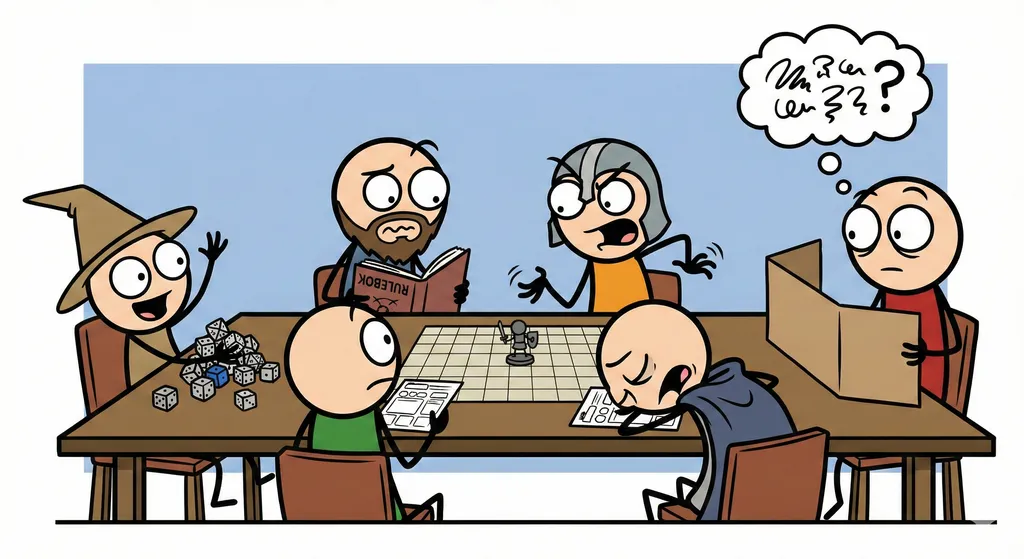
The recent whispers from Wizards of the Coast, concerning the Dungeons & Dragons product release schedule stretching into 2026 and 2027, are more than just calendar entries; they are the first tremors of a strategic shift. For veteran Game Masters and players who have navigated the ebb and flow of previous D&D editions, a multi-year forecast is a profound statement about the future of the world's most popular TTRPG.
While specific titles and exact mechanics remain, as expected, under wraps at this early stage, an extended roadmap like this strongly suggests a commitment to ongoing mechanical iteration. This isn't merely about adding new monsters or spells; it implies a structured approach to evolving the core D&D 5th Edition experience, likely building upon the One D&D Core Rulebooks that will have settled into the ecosystem by then. We can anticipate modules and supplements designed to explore new subsystems, perhaps expanding on existing rules for downtime, stronghold management, or even more nuanced social interaction. Consider how previous editions introduced splatbooks that, while often lore-heavy, frequently contained entirely new classes, feats, or magic item categories that fundamentally altered character building and combat encounters. For the current or forthcoming iteration of Dungeons & Dragons, this could translate into refined crafting rules, expanded tactical combat options beyond the basic action economy, or even a formalized system for large-scale warfare and domain management, moving beyond abstract guidelines. The very existence of a multi-year plan suggests a structured approach to mechanical evolution, rather than reactive patches. It's not just new spells; it's potentially new *spellcasting paradigms* or combat maneuvers that genuinely enhance player agency and tactical depth.
From a lore perspective, a multi-year plan allows for deep dives into previously unexplored corners of the D&D multiverse, or a triumphant return to beloved, yet underserved, settings. Imagine a series of releases dedicated entirely to the planes – a comprehensive guide to Sigil and the Outlands, or a robust return to Spelljammer's wildspace with proper, expansive adventure paths that don't just scratch the surface. This isn't just about new monsters; it's about new *ecologies* and *societies* for those monsters to inhabit, complete with intricate political landscapes and ancient histories. We could see the emergence of truly epic campaigns, designed from the ground up to span multiple years of table time, with interwoven narratives that truly challenge a party over dozens of levels. Perhaps a significant chunk of the 2026/2027 slate is dedicated to a new, overarching narrative, a 'meta-plot' that ties disparate adventures and settings together, similar to how the Dragonlance or Forgotten Realms sagas unfolded over decades, but with modern narrative pacing and design rigor. This signals an opportunity for a truly cohesive and expansive vision of the D&D cosmology.
For the Game Master, a clear vision extending years into the future is a potent tool. On one hand, it provides stability, allowing for long-term campaign planning and investment in a system that isn't going to be immediately obsoleted. It fosters confidence in the longevity of the ruleset. On the other, it demands an ongoing commitment to learning and integrating new material, ensuring that the additions are meaningful and not merely bloat. However, the true benefit lies in the potential for depth. Instead of a series of disconnected one-shots or short adventures, we might finally see the kind of sprawling, epic sagas that defined the golden age of TTRPGs, but with modern sensibilities and polished design. For players, this signals a vibrant, evolving ecosystem for Dungeons & Dragons. It suggests that Wizards of the Coast is listening to the community's desire for more robust systems and richer lore, moving beyond the perceived simplicity of early 5th Edition. The danger, as always, is feature creep – but a well-curated, long-term plan can avoid this by focusing on meaningful additions rather than superficial ones. This isn't just about new content; it's about the continued *health and vitality* of the D&D brand, promising a future rich with adventure and discovery for years to come.
Top Pick: The Dungeon Master's Guide (5th Edition)
Essential for understanding core D&D design principles and adapting future content
Check Price on Amazon →Related Stories
D&D's 2027 Keynote: Adaptive Rules & Athasian Sands
Wizards of the Coast unveiled its vision for Dungeons & Dragons at Gen Con 2027, promising significant shifts in encounter design and setting integration. We br
The Campaign's First Promise: A Sacred Table Contract
The initial hook of a TTRPG campaign sets a crucial expectation, shaping player engagement and GM preparation. We dissect the 'promise' inherent in a simple gob
Paizo's Catalog Expands to DTRPG: What It Means for Your Table
Paizo's complete Pathfinder and Starfinder PDF catalogs are now available on DriveThruRPG, greatly enhancing accessibility for GMs and players. This move promis