
Gnome Stew's Decade: Deconstructing GMing's Core Pillars
A decade of insightful TTRPG discourse from Gnome Stew prompts a deep dive into the foundational philosophies of gaming, narrating, and simulation. We dissect how these evolving principles shape our tables and empower GMs.
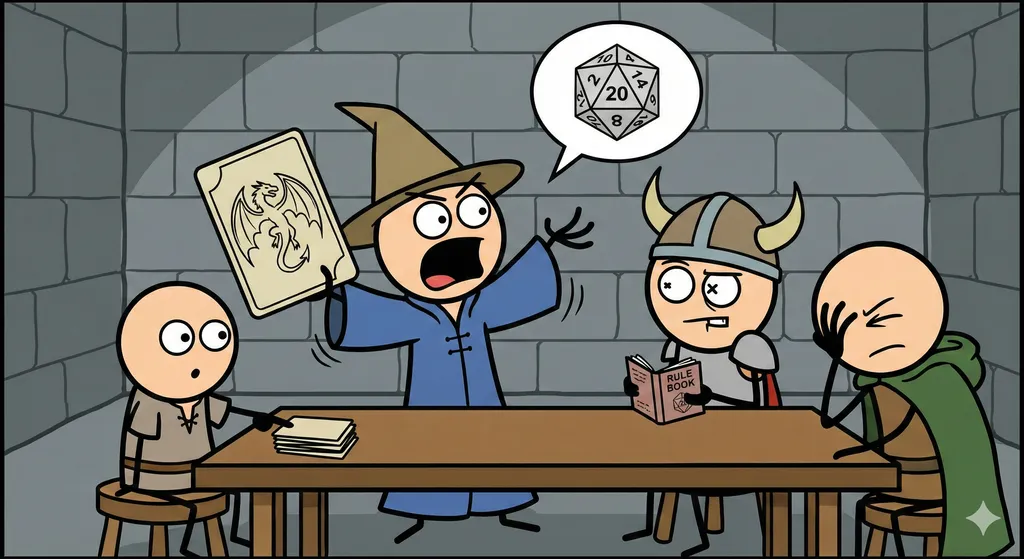
The recent 10-year retrospective from Gnome Stew, celebrating a decade of profound insights from a veteran contributor, has prompted a critical re-evaluation of the core tenets of game mastering. Specifically, the author's inaugural piece from March 28, 2016, which sought to delineate the crucial distinctions between gaming, narrating, and simulation, serves as a potent touchstone for a decade of evolving TTRPG theory. This isn't merely an academic exercise; it’s a vital framework for every Game Master seeking to elevate their table.
At its heart, this tripartite distinction offers GMs a diagnostic lens through which to view their craft. 'Gaming' emphasizes the mechanical contract: rules, challenges, player skill, and the explicit win/loss conditions that define a structured play experience. Think of a combat encounter in D&D 5th Edition, where tactical positioning, spell slot management, and dice rolls dictate success. The GM here acts as an impartial adjudicator, ensuring the rules are applied fairly and the challenge is appropriate. It's about overcoming obstacles within a defined system, where player choice, often expressed through character abilities, directly impacts the outcome. This focus provides a clear sense of accomplishment and progression, appealing to players who enjoy strategic depth and measurable achievements.
'Narrating,' conversely, shifts focus to the collaborative storytelling aspect. Here, the GM and players co-create an emergent story, prioritizing character arcs, dramatic pacing, and emotional resonance. Rules might bend for the sake of a compelling moment, or player agency in the story's direction takes precedence over strict mechanical outcomes. Games like Fiasco or many Powered by the Apocalypse titles lean heavily into this mode, where character relationships and the unfolding plot are paramount. The GM facilitates the narrative, setting scenes, portraying NPCs, and asking leading questions that draw players deeper into their characters' journeys. It’s about crafting a memorable tale, where the journey itself, and the growth of the characters, is the primary reward.
Finally, 'Simulation' concerns the internal consistency and verisimilitude of the game world. This mode emphasizes the logic of the setting, its physics, ecology, social structures, and the consequences of actions within that established reality. An Old School Renaissance (OSR) dungeon crawl, where resource management, exploration, and the threat of a dangerous, uncaring world are central, exemplifies this. The GM embodies the world itself, adjudicating how its systems react to player input, often without overt plot intervention. It’s about immersion in a believable, reactive environment, where discovery and adaptation to a consistent reality are key.
Over the past decade, the TTRPG landscape has diversified dramatically. The rise of narrative-first systems, the enduring popularity of crunchy tactical games, and the resurgence of OSR sensibilities have created a vibrant, if sometimes disparate, ecosystem. Gnome Stew, through its consistent output, has provided a steady beacon for GMs grappling with this complexity. Understanding these three pillars isn't about choosing one over the others; it's about recognizing the inherent tension and interplay between them. A truly masterful GM understands when to lean into the explicit rules of 'gaming,' when to prioritize the unfolding 'narrative,' and when to emphasize the consistent reality of the 'simulation.' This awareness allows for conscious design choices at the table, ensuring the GM and players are aligned on the session's primary focus. It's a meta-skill that empowers GMs to diagnose table issues, adjust their approach mid-session, and ultimately deliver a more satisfying experience for everyone. For those looking to put these principles into practice, resources like Sly Flourish's Return of the Lazy Dungeon Master offer practical strategies for balancing these elements without overwhelming prep.
This framework doesn't just describe different playstyles; it offers a foundational grammar for discussing and improving game design and GMing techniques. It’s a testament to the enduring value of deep, thoughtful analysis in our hobby, a value Gnome Stew has consistently championed. By understanding these distinctions, GMs can consciously sculpt the 'feel' of their table, leading to more engaging, coherent, and ultimately, more fun campaigns.
Top Pick: Return of the Lazy Dungeon Master
Provides actionable strategies for balancing prep and improvisation, directly applying the principles of gaming, narrating, and simulation to your table.
Check Price on Amazon →Related Stories
Crafting the Perfect Con One-Shot: A Deep Dive into Ephemeral Mastery
Gnome Stew's "The Art of the Con Game" unpacks the unique design philosophy behind great convention one-shots. This exploration reveals how focused mechanics an
Print's Enduring Reign: Why Physical RPG Books Still Crit
EN World's "RPG Print News" report highlights the robust health of physical D&D, Pathfinder First Edition, and OSR titles. This isn't just nostalgia; it's a tes
GAMA Expo 2026: Industry Shifts and Tabletop's Future
The Tabletop Bellhop's GAMA Expo 2026 recap reveals crucial industry shifts impacting game design and player experience. We dissect the evolving mechanics and l