Pintó: Subverting Artistry at the Table
Fernando Marecos's Pintó, a forthcoming party game from Fractal, challenges players to draw the worst and win. We dive into how this unique mechanic fosters fun and community.
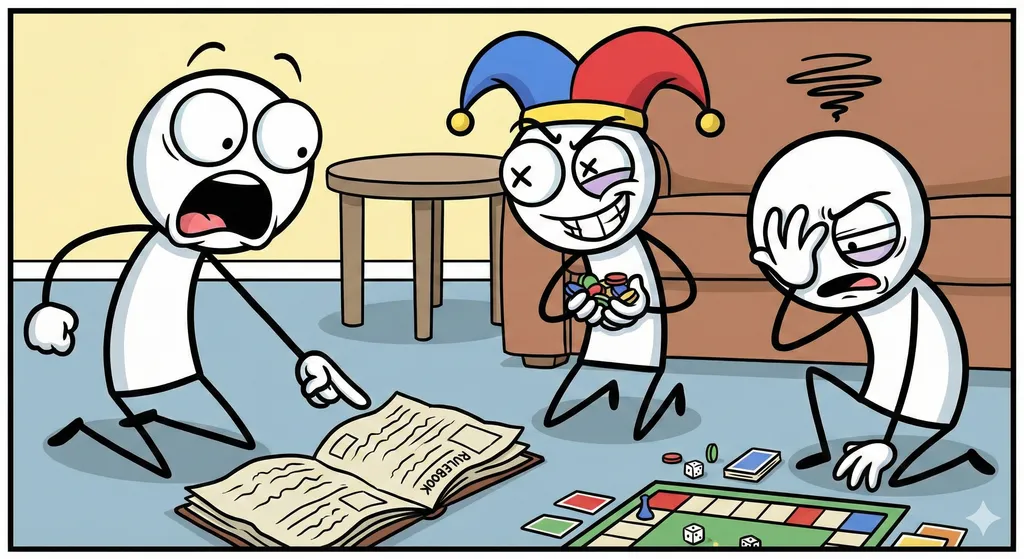
Pintó, the forthcoming party game from Chilean publisher Fractal, is poised to flip the canvas on traditional drawing challenges, inviting players to embrace their inner amateur artist and, quite literally, draw badly to win. Designed by Fernando Marecos, an industrial designer, teacher, and illustrator by trade, Pintó isn't just another entry in the party game genre; it's a deliberate subversion, and one that holds fascinating implications for our tables.
At its core, Pintó presents a deliciously simple premise: whoever draws the worst, wins. This isn't about artistic talent or precise rendering; it's about intentional ineptitude. But how does one quantify “bad” at the table? This is where the crunch of Pintó’s design truly shines. While the full rulebook awaits its 2025 publication, the implications of such a mechanic suggest a vibrant social contract. Typically, party games of this ilk employ a rotating judge or a democratic voting system. Imagine a prompt like “a majestic dragon” or “the feeling of existential dread.” Players sketch their interpretations, but instead of striving for clarity, they aim for a masterful mess. The meta-game here is exquisite: how do you draw something recognizably *what it is*, but in such an utterly dreadful fashion that it out-competes the equally terrible efforts of your friends? It’s a tightrope walk between illegibility and sheer, unadulterated artistic failure. The source material hints at the designer’s motivation, spurred by a contest deadline – a constraint that, ironically, often leads to the kind of rushed, imperfect output that Pintó celebrates. This pressure, when translated to gameplay, could manifest as timed rounds, forcing players to commit to their terrible art without overthinking, reinforcing the game's core loop.
Marecos’s background as an illustrator designing a game about drawing *badly* is a compelling piece of lore in itself. It’s a playful nod to the often-intimidating world of art, stripping away the pressure of perfection. The name “Pintó,” meaning “painted” or “it painted,” is simple and evocative, hinting at the spontaneous, unrefined act of creation that the game champions. This isn't a game about a rich fantasy world or a complex narrative; its lore is found in the shared human experience of creative insecurity and the joy of letting go. It’s about the permission to be imperfect, a stark contrast to games like the classic Pictionary where clarity is king. This game’s setting is the very table it's played on, and its story is the collective laughter and self-deprecating banter of its players.
The verdict for Pintó at the table is overwhelmingly positive, even in anticipation. This game has the potential to be a phenomenal icebreaker, leveling the playing field in a way few other drawing games manage. Those who typically shy away from art-based games due to perceived lack of skill will find themselves empowered, their “weakness” suddenly their greatest asset. It encourages genuine connection through shared hilarity and vulnerability, transforming potential artistic anxiety into pure, unadulterated fun. The replayability will hinge on the creativity of its prompts and the ever-shifting social dynamics of any given group. Pintó isn't just a game; it's a social experiment in creative failure, proving that sometimes, the worst art makes for the best memories.
Top Pick: Telestrations
For a different take on drawing communication and misinterpretation.
Check Price on Amazon →Related Stories
The Unsung Architects: Why Creator Credit Isn't Just Fair, It's Crucial
Our hobby thrives on creativity, yet creators often remain uncredited. We delve into how proper recognition impacts game design, innovation, and the very future
Pilgrim Poker: The Journey West, Blind Bets, and Hidden Hands
Chok-Sien Hiew's Pilgrim Poker reimagines a classic epic with a clever twist on card game mechanics. Players navigate uncertainty, betting on unseen hands in a
Captain Keep Upright: The Glorious Peril of Drunken Seafaring
Grogbeard Games' Captain Keep Upright promises a raucous voyage into nautical chaos, where strategic drunkenness meets the fury of the high seas. We delve into