
Pro Tour Paradox: The Deck That Won By Not Playing Magic
A peculiar strategy emerged triumphant at a recent Magic: The Gathering Pro Tour, showcasing a deck designed to actively prevent both players from engaging with the core game. This "anti-Magic" approach has ignited fervent discussion among the community regarding competitive integrity and design philosophy.
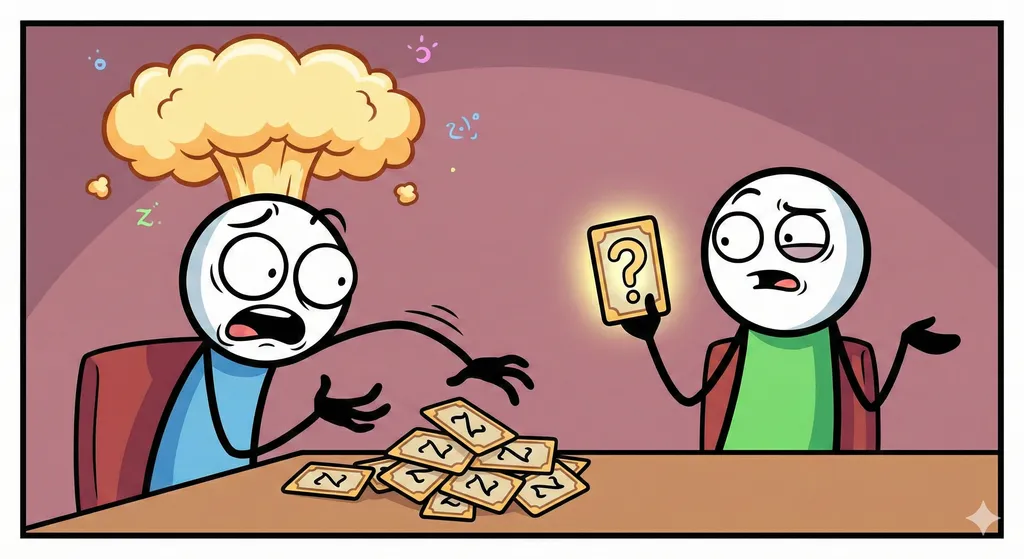
The hallowed halls of a Magic: The Gathering Pro Tour, a premier event hosted by Wizards of the Coast/Hasbro, are typically where we witness the pinnacle of strategic innovation. Yet, a particular archetype, encapsulated by veteran player Sam Black's infamous declaration that "The deck doesn't try to win. It tries to prevent both players from playing," has long haunted the competitive scene, recently achieving significant success. This isn't just a win; it's a statement, a philosophical challenge to the very essence of tabletop gaming.
At its core, this strategy thrives on the concept of 'prison' or 'stax' mechanics. Consider the notorious Lantern Control archetype, a masterclass in resource denial and psychological warfare. The pilot leverages cards like Lantern of Insight and Codex Shredder to manipulate the top card of both players' libraries, effectively deciding what the opponent will draw. This isn't about countering spells after they're cast; it's about preventing them from ever being drawn. Combine this with Ensnaring Bridge, which shuts down creature attacks unless the Lantern player has an empty hand, and Chalice of the Void, which preemptively counters spells of a chosen mana value. The result? An opponent who finds their hand full of unplayable cards, their board locked down, and their ability to interact with the game utterly nullified. The 'win condition' often becomes the opponent's concession, or a slow, agonizing mill to zero cards in library – a victory achieved by systematically dismantling the opponent's capacity to play Magic, rather than through direct damage or overwhelming board presence. The pilot, meanwhile, engages in a meticulous, almost solitaire-like dance of library manipulation, a highly skilled but often solitary endeavor.
From a lore perspective, not that of Dominaria's planeswalkers but of the game itself, this strategy represents a profound subversion of Magic's implied social contract. The 'spirit of the game' suggests an interactive contest, a duel of wits where spells clash and creatures battle. Decks like Lantern Control challenge this narrative, arguing that victory, by any legal means, is the ultimate goal. It's a meta-narrative about breaking the game's fundamental assumptions, exploring the edges of its rule set. This approach forces designers to consider the implications of every new card, every potential interaction, lest another 'anti-game' strategy emerges to dominate the competitive landscape. It's a fascinating, if sometimes frustrating, chapter in the ongoing story of Magic's evolution, where players continually push the boundaries of what's considered 'fair' or 'fun'.
So, what's the verdict for the table? For the pilot, mastering such a complex, resilient strategy offers immense satisfaction. It's a demanding mental exercise, a puzzle solved turn by turn, that rewards deep understanding of the meta-game and meticulous execution. For the opponent, however, the experience can be soul-crushing. Facing a prison deck often feels less like a game and more like an endurance test against an inevitable, frustrating demise. The 'non-game' sensation can alienate players and spectators alike, as watching someone slowly mill their opponent or prevent them from taking any meaningful action isn't always the most thrilling spectacle. While these decks undeniably add a layer of strategic depth and force meta-game adaptation, their prevalence can lead to less interactive, less enjoyable competitive environments. For the long-term health of competitive Magic, a delicate balance must be struck between allowing diverse strategies and ensuring games remain engaging and interactive. The innovation is undeniable, but the 'table feel' can be divisive, reminding us that sometimes, winning isn't everything.
For those looking to dive deeper into the strategic nuances of Magic's competitive scene, exploring analytical content can be invaluable. competitive Magic resources
Top Pick: Commander preconstructed decks
For a reminder of Magic's vibrant, interactive, and often surprising social gameplay.
Check Price on Amazon →Related Stories
Candelabra's Legacy Farewell: A Deep Dive into MTG's Latest Bans
Wizards of the Coast has dramatically altered the competitive Magic landscape with a significant ban. We'll explore the implications of Candelabra of Tawnos's d
Connive's Cunning: MTG's Villainous Mechanic Masterpiece
The Connive mechanic, introduced in Magic: The Gathering, stands as a testament to elegant design, perfectly embodying villainous scheming and strategic depth.
Seeker of Skybreak: A New Combo Paradigm in Pauper
Joe Dyer's recent analysis of the Seeker of Skybreak combo signals a significant shift in the Pauper meta. This deep dive explores how this seemingly innocuous