Tag Team: Arthur's Legacy - A Strategic Duel of Legendary Proportions
Scorpion Masque's two-player auto battler, Tag Team: Arthur's Legacy, redefines competitive dueling with its brilliant pre-combat strategy. We break down how this unique design elevates the genre, delivering a consistently engaging tabletop experience.
Scorpion Masque, with their latest two-player auto battler, Tag Team: Arthur's Legacy, has managed to do something genuinely intriguing: they’ve taken a genre often maligned for its passivity and injected it with a potent dose of player agency and cerebral strategy. Designed by the insightful duo Gricha German and Corentin Lebrat, this title, which I first encountered at Gen Con, has earned a permanent spot on my table, proving that the auto battler format can indeed be a crucible for tactical depth.
At its core, Tag Team: Arthur's Legacy is a game of calculated deployment and predictive counter-play, wrapped in the familiar tapestry of Arthurian legend. Forget the notion of simply watching units clash; here, the ‘auto’ in ‘auto battler’ refers strictly to the *resolution* of combat, not the *decisions* leading up to it. Each round, players draft and deploy two champions from their hand onto their side of the battlefield – one ‘active’ and one ‘supporting.’ This isn’t just about putting your strongest fighter forward; it’s about understanding the intricate dance of abilities, keywords, and synergies. The active unit’s primary abilities trigger, while the supporting unit provides a passive bonus or a reactive effect, often contingent on specific conditions. The 'tag' mechanic allows for a single, pivotal swap per round, turning a supporting unit active and vice-versa. This single decision point is where the game’s strategic brilliance truly shines, offering a dynamic response to your opponent's perceived intentions. Do you swap to save a weakened champion, or to unleash a devastating combo that your opponent didn't account for? Once both players have committed their teams and made their tag decision, combat resolves sequentially, with units attacking, defending, and triggering effects based on their stats and abilities. There’s no dice rolling here; the outcomes are deterministic, a direct result of your pre-battle planning. This emphasis on pre-combat maneuvering means every choice, from the initial draft to the final deployment, carries significant weight, rewarding foresight over mere luck of the draw. It’s a beautifully elegant system that minimizes downtime and maximizes strategic engagement, making each round a tense, rewarding puzzle.
The 'Arthur’s Legacy' setting is far more than mere window dressing; it’s intrinsically woven into the game’s mechanics and thematic resonance. Players don't just command generic fighters; they lead iconic figures and mythical creatures from the Arthurian mythos, each imbued with abilities that reflect their lore. Merlin might offer powerful magical support, while Sir Lancelot could be a frontline brawler with a defensive stance. The 'tag team' concept itself feels perfectly natural within the context of legendary champions fighting in pairs, perhaps reflecting the bonds of the Round Table or the dark alliances of Morgana le Fay. The art direction and flavor text on the cards expertly evoke the magic and chivalry of the era, drawing players deeper into the world without ever feeling obtrusive. It’s a refreshing take on a beloved setting, focusing on a more intimate, tactical conflict rather than a sprawling epic. This focused narrative ensures that even as you delve into the intricate mechanics, you're still immersed in a compelling story, one where the fate of Camelot might hinge on a single, well-timed 'tag'. For those seeking to deepen their understanding of these legendary duels, I highly recommend exploring new strategies to fully grasp the nuances of its unique combat system.
So, is Tag Team: Arthur's Legacy good for *our* tables? Absolutely. This isn't just another card game; it's a masterclass in elegant design, proving that a deterministic combat system can be profoundly strategic. The two-player format ensures a tight, competitive duel, free from the chaos of larger player counts, making it ideal for a quick, brain-burning session with a friend. The replayability is enormous, stemming from the sheer number of unit combinations and the ever-shifting meta of counter-picks. It’s a game that rewards repeated plays, as you learn to anticipate your opponent's strategies and discover new, devastating synergies within your own roster. While some might initially miss the visceral thrill of dice rolls, the satisfaction derived from out-thinking your opponent through superior planning is far more profound and enduring. Tag Team: Arthur's Legacy is a thinking player’s auto battler, a testament to the fact that innovation in game design often lies in refining core concepts rather than simply adding more complexity. It’s a game that belongs in the collection of anyone who appreciates a tight, competitive, and genuinely clever two-player experience.
Top Pick: Tag Team: Arthur's Legacy
A masterclass in strategic pre-combat planning and elegant two-player dueling.
Check Price on Amazon →Related Stories
Wargame Nostalgia: A Mechanized Trip Down Memory Lane or a Dead End?
Modern wargames grapple with player nostalgia, often embedding 'classic' mechanics into new designs. We dissect if these echoes of the past enrich the tabletop
Jurassic Crisis: Prehistoric Survival Meets Arcane Dread
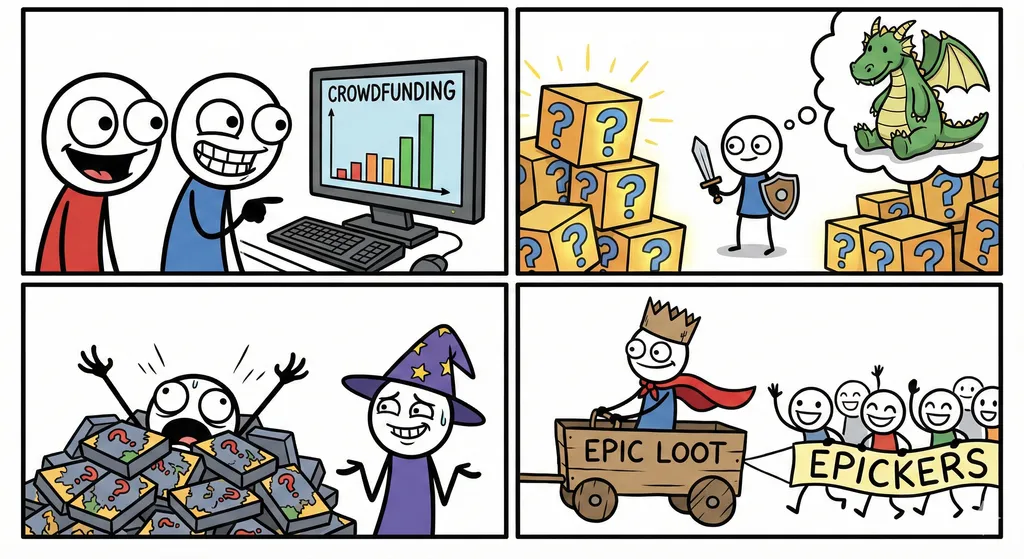
Apex Games' Jurassic Crisis has stormed crowdfunding, promising a unique blend of PvE and PvP survival against ancient beasts and eldritch forces. We deep-dive
Knizia's 'Stonk Market Review': A Deep Dive into Market Mayhem
Allplay's 'Stonk Market Review' reintroduces real-time trading with a meme-infused twist, courtesy of Dr. Reiner Knizia. This Gen Con 2026 standout promises fra