
The Ethical Deck: Why Powerful Cards Stay in the Binder
The latest Commander Clash podcast dives into the powerful cards players intentionally avoid. This isn't about bans, but a deeper look at the social contract and table experience in Magic's most popular format.
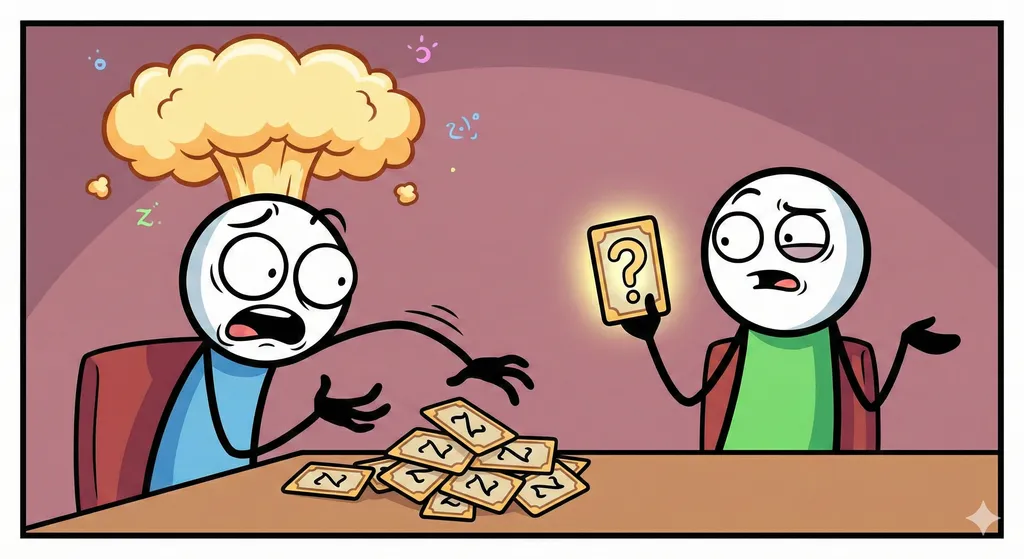
The hallowed halls of Magic: The Gathering's Commander format often reverberate with tales of epic plays, intricate combos, and the sheer joy of a shared tabletop experience. Yet, as the MTGGoldfish Commander Clash Podcast 243 recently explored, some of the most undeniably powerful cards in the game are intentionally left out of decks, not by official decree, but by player consensus. This isn't about the ban list; it's about the unspoken agreement, the social contract that underpins the very soul of Commander, or EDH as many of us old guard still call it.
At its core, Commander's mechanics thrive on variety, interaction, and the slow burn of a multi-player game. When discussing cards players refuse to play, we're not talking about weak cards. We're talking about titans of efficiency and raw power that, ironically, often lead to less fun. Consider the mechanical implications of Stax pieces like Winter Orb or Stasis. These cards, by design, constrain resources, essentially telling opponents, "You don't get to play the game now." While strategically potent in competitive cEDH pods, in a casual setting, they grind the game to a halt, turning what should be a dynamic exchange into a frustrating waiting game. Similarly, mass land destruction effects such as Armageddon or Ruination, while technically legal, often leave players without a board state, effectively ending their game without an actual win, creating a deeply unsatisfying experience for the table. Even some highly efficient infinite combos, particularly those that assemble with minimal interaction like Thassa's Oracle and Demonic Consultation, can feel like a sudden, non-interactive 'I win' button, bypassing the strategic back-and-forth that many players cherish. These cards aren't mechanically broken; they're mechanically *disruptive* to the desired play pattern of Commander, pushing the envelope beyond spirited competition into outright table suppression. For a well-rounded Commander experience, players often seek to mitigate such game-ending unilateral plays.
The 'lore' of Commander isn't just about the planeswalkers and ancient artifacts; it's about the format's origin as Elder Dragon Highlander—a casual, kitchen-table affair born of house rules and a shared desire for epic, expressive games. The format's very ethos is built on player agency and the joy of self-expression through deck building. This historical context informs the modern social contract, where players tacitly agree to prioritize fun, interaction, and the development of a shared narrative over ruthless optimization. When a card consistently sidesteps this narrative, forcing players into non-games or shutting them out of interaction, it violates the spirit of what Commander was intended to be. It's akin to a D&D player consistently metagaming or a Warhammer 40K player using an exploit; it diminishes the collective enjoyment and the 'story' being told at the table.
So, what's the verdict? Is this collective refusal of powerful cards a weakness, or a testament to the format's strength? Unequivocally, it's the latter. This player-driven self-regulation is the single greatest factor in Commander's enduring popularity and health. It demonstrates that the community values the *quality* of the play experience over raw power level. It fosters crucial pre-game discussions, often dubbed 'Session Zero' for TTRPG players, where expectations are set and power levels are aligned. It champions diverse strategies and encourages creative deck building, rather than funneling players into a narrow, optimized meta. This isn't about shaming players for their card choices, but about understanding the nuanced impact certain mechanics have on the collective fun. The refusal to play certain 'powerful' cards is not a sign of weakness, but a conscious choice to cultivate a more enjoyable, interactive, and ultimately, more fulfilling game for everyone involved.
Top Pick: Ultra Pro Commander Deck Box
Durable storage for your most cherished Commander decks
Check Price on Amazon →Related Stories
Magic's 'Goodwill Collection': A Confounding Altruism?
Wizards of the Coast's latest reveal, the 'Most Confusing Goodwill Collection' for Magic: The Gathering, introduces mechanics that challenge traditional competi
Commander's Character Arc: All Legends, All At Once
MTGGoldfish's latest Commander Clash explores a variant where players command every version of a chosen legend. This deep dive examines the mechanical chaos and
Kitsune's Technique: Mill Recursion Reaches Critical Mass
The latest Universes Beyond Secret Lair introduces Kitsune's Technique, a powerful blue sorcery that scales its mill effect with the graveyard's size. This new