
The GM's First Steps: Cutting Through the Noise for New Masters
Navigating the initial hurdles of Game Mastering can feel like a labyrinth. We dissect essential advice, separating practical mechanics from overwhelming lore for aspiring GMs.
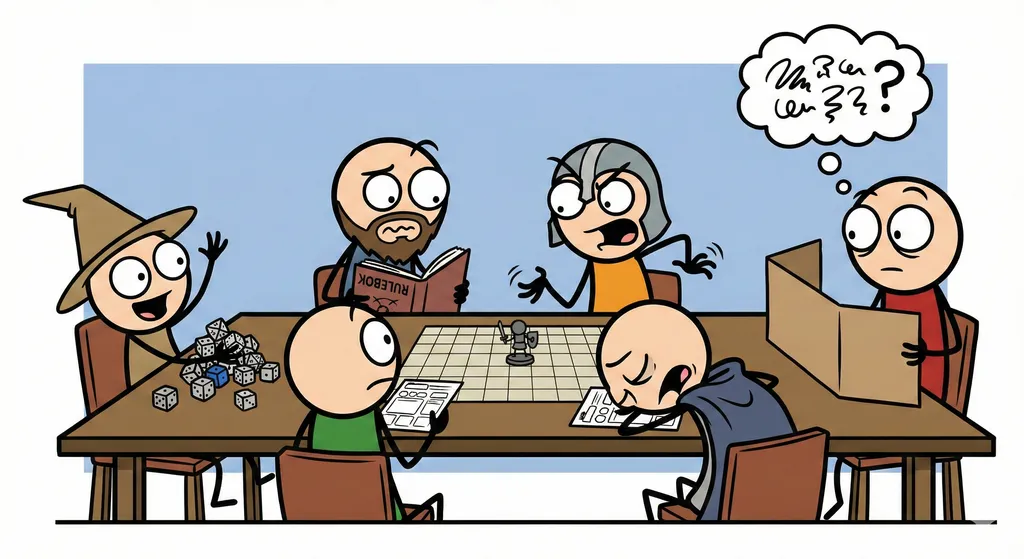
The recent discourse sparked by Gnome Stew's piece, "If You Were Going to Start GMing," has resonated deeply within the TTRPG community, bringing to the forefront a critical question: what foundational knowledge truly arms a nascent Game Master for success? As veterans, we often forget the sheer deluge of information facing newcomers. It's not just about knowing the rules; it's about understanding the art of facilitation.
Let's cut to the crunch. When we talk about the mechanics of GMing, we're not just discussing dice rolls and stat blocks. We're talking about the meta-mechanics of the table itself. The most crucial initial lesson isn't how to build a world, but how to run a *session*. A new GM needs a concrete understanding of the session loop: establish the situation, present a challenge, let players react, adjudicate outcomes, and escalate. This iterative process, often overlooked in favor of sprawling world-building guides, is the bedrock. Focus on setting clear stakes, understanding player intent, and the art of 'yes, and...' or 'yes, but...' when improvising. Safety tools, too, are a mechanical necessity, not an optional add-on; they are the fundamental guardrails that ensure a positive play experience for everyone. A QuickStart rulebook, as Gnome Stew's respondents noted, is invaluable because it pares down the complexity to these core interaction mechanics. It teaches you how to *play* the game as a GM, before you're asked to *design* one. Master the flow of combat, the structure of social encounters, and the rhythm of exploration within a confined scenario. This provides a tangible, repeatable process, rather than an abstract ideal.
Now, for the lore, not of a fantasy realm, but of the Game Master's role itself. The GM is not merely a rules arbiter; they are the architect of shared imagination, a descendant of the wargaming referee who evolved into the modern storyteller. This role carries a profound legacy: to foster collaborative narrative, to embody the world, and to challenge players in meaningful ways. The "lore" of being a GM is about understanding the social contract at the table, the unwritten rules of respect, engagement, and shared responsibility for fun. It's recognizing that the world you present is not solely *yours*; it becomes a shared space, shaped by player choices. The weight of this responsibility, the trust placed in the GM to curate an experience, is a powerful motivator, but also a potential source of anxiety for the uninitiated. Understanding this historical and cultural context elevates the task from merely running a game to participating in a cherished tradition. It means embracing the collaborative spirit that underpins every roll of the dice and every narrative twist, from the earliest dungeon crawls to the most narrative-driven indie TTRPGs.
So, is the current landscape of GM advice good for the game? When it focuses on the practical, the repeatable, and the player-centric, absolutely. The "table feel" of a game run by a new GM who has grasped these core principles is one of confidence and agency. Players feel heard, challenges feel fair, and the narrative progresses organically, even if the GM is still learning the finer points of a specific system. Conversely, a GM overwhelmed by lore or grand design principles without the mechanical chops to run a smooth session can lead to stagnation, frustration, and ultimately, a table that disbands. The ideal advice for a new GM isn't a compendium of world-building tropes or an exhaustive list of house rules, but a toolkit for facilitation. It's about empowering them to make decisions in the moment, to react to player brilliance, and to guide the narrative collaboratively. This fosters confidence, which is the most potent tool in any GM's arsenal. It allows them to embrace improvisation and understand that 'failing forward' is not a failure at all, but a narrative opportunity. A truly effective GM learns to dance with the players, not dictate to them. The future of our hobby hinges on cultivating confident, capable GMs, and that starts with clear, actionable guidance.
The Lazy Dungeon Master's Guide
Top Pick: A well-designed GM Screen
Provides quick rule references and a barrier for notes, reducing cognitive load for new GMs.
Check Price on Amazon →Related Stories
Blades in the Dark's Brilliance: Three Mechanics Every TTRPG Needs
Delve into the genius of Blades in the Dark and its Forged in the Dark engine. We dissect three core mechanics that elevate narrative play and empower both GMs
Chronos Engine: Echoes & Agency in TTRPG Storytelling
Aetherforge Games' Chronos Engine introduces a revolutionary Dynamic Causality System. This mechanic empowers players to collaboratively shape game lore and his
D&D 5e's Lightning Rods: Engineering Heroic Player Moments
Sly Flourish's 'Lightning Rod' concept offers GMs a potent tool for D&D 5th Edition. Discover how designing specific encounters can spotlight player abilities a