
Wargame Nostalgia: A Mechanized Trip Down Memory Lane or a Dead End?
Modern wargames grapple with player nostalgia, often embedding 'classic' mechanics into new designs. We dissect if these echoes of the past enrich the tabletop or simply complicate the future.
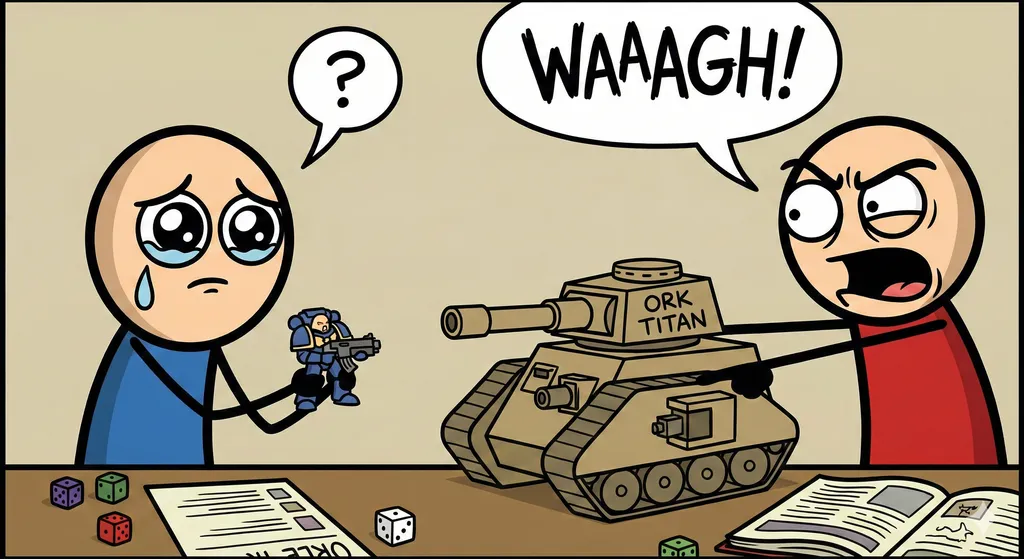
The recent unveiling of Chronos Legion: Echoes of the Past by Aetherforge Games has ignited the age-old debate surrounding wargame nostalgia. Is the deliberate invocation of past glory a cunning design choice that deepens immersion, or a crutch that risks alienating new players and obscuring genuine innovation? The Crit Sheet believes it's a tightrope walk, and Aetherforge's approach offers a fascinating case study in how publishers attempt to bottle the lightning of yesteryear.
Aetherforge's primary gambit in Chronos Legion is its 'Legacy Protocols' system. Rather than simply porting over old rules wholesale, they've implemented unit abilities and scenario modifiers that *mimic* the feel of older, more complex editions. For instance, certain elite 'First Empire' units can activate a 'Pre-Collapse Doctrine,' temporarily reverting their movement and combat resolution to a more granular, less forgiving dice-pool system reminiscent of early 2000s skirmish games. This isn't just flavor text; it introduces a genuine tactical dilemma. Do you leverage the raw power of a unit operating under these demanding protocols, risking critical failures and slower activation, or stick to the streamlined modern ruleset for consistency? It’s a bold move, forcing players to consciously engage with different rules paradigms mid-game. The design intent is clear: to offer veteran players a taste of that 'hardcore' crunch without forcing it on everyone. Similarly, the 'Temporal Flux' mission type introduces asymmetrical objectives where one side might have access to 'ancient' weapon profiles with different range bands and damage outputs, demanding a nuanced understanding of two distinct combat engines simultaneously. This creates a fascinating layer of strategic depth, where mastering both 'modern' and 'legacy' systems becomes a mark of a truly skilled commander. Furthermore, the game's unit customization options include 'Relic Enhancements' that provide powerful bonuses but come with a 'Stability Check' mechanic – a roll against a fluctuating difficulty that can either massively boost the unit or cause it to 'overload' and suffer penalties, echoing the unpredictable nature of older, less balanced systems. This isn't just a nod; it's a mechanical embrace of diverse rulesets, pushing the boundaries of what a single game system can encompass.
The narrative of Chronos Legion perfectly underpins this mechanical nostalgia. The galaxy is recovering from the 'Great Collapse,' a cataclysm that shattered the First Empire and scattered its advanced technology. Factions now vie for control over 'Chronos Shards' — artifacts that occasionally resonate with echoes of the past, subtly altering reality or granting glimpses into forgotten eras. This allows the designers to integrate 'Legacy Protocols' not as an arbitrary rules option, but as a diegetic phenomenon. When a unit activates a 'Pre-Collapse Doctrine,' it’s not merely a player choice; it's a narrative event where the unit taps into the raw, unrefined power of a bygone age, often with unpredictable consequences. The lore further enriches this by detailing specific 'First Empire' heroes and their unique, often brutal, combat philosophies, which are then translated into unique unit upgrades or scenario conditions. It’s a smart integration, ensuring that the nostalgia isn't just a mechanical gimmick but a fundamental part of the setting's identity. Imagine discovering an ancient STC blueprint for a long-lost tank, and then having the option to field it with rules that feel distinctly like they're from a different era of wargaming. This kind of immersive world-building creates a compelling reason for the mechanics to exist beyond mere fan service.
So, does this engineered nostalgia translate into a better table experience? For many veterans, the answer is a resounding 'yes.' The 'Legacy Protocols' offer a refreshing challenge, a deliberate speed bump in an otherwise sleek system, forcing players to adapt and strategize with different rulesets. It can evoke a powerful sense of 'aha!' as old muscle memory kicks in, offering a deeper engagement than simple reskins. The dynamic interplay between modern efficiency and historical unpredictability creates memorable moments. However, the potential pitfalls are equally evident. New players, already grappling with a modern ruleset, might find the intermittent shifts to more complex mechanics jarring or even frustrating. It demands a higher cognitive load, potentially extending game times and increasing the barrier to entry. The critical balance lies in making these nostalgic elements *optional* or *contextual*, rather than mandatory. Aetherforge has largely succeeded here by tying them to specific units or scenarios, allowing players to opt-in to the deeper crunch as they gain familiarity. This empowers players to tailor their experience, whether they seek streamlined action or a more intricate, 'retro' challenge. When done right, as in Chronos Legion, it’s not just a trip down memory lane; it’s an expansion of the game's tactical landscape, offering layers of complexity for those who seek it without alienating the broader audience. It demonstrates that nostalgia, when treated as a sophisticated design tool rather than a mere marketing ploy, can genuinely enrich the strategic depth and narrative resonance of a wargame, proving that looking back can sometimes push us forward.
Top Pick: Chronos Legion: Echoes of the Past Starter Set
A compelling blend of modern design and optional retro mechanics perfect for veterans and new players alike.
Check Price on Amazon →Related Stories
Tag Team: Arthur's Legacy - A Strategic Duel of Legendary Proportions
Scorpion Masque's two-player auto battler, Tag Team: Arthur's Legacy, redefines competitive dueling with its brilliant pre-combat strategy. We break down how th
Knox's Cannon: Unpacking Washington's War's Artillery Commander
We dissect the Henry Knox Continental Artillery Commander card from GMT Games' Washington’s War, examining its crunch and fluff. Discover how this single card e
Line of Fire: Burnt Moon – Tactical Robots, Lunar Scars
Osprey Games' Line of Fire: Burnt Moon thrusts players into a high-stakes robotic skirmish between corporate giants and hackers over the Jovian power grid. This