
Warhammer 40k Base Sizes: The Unseen Battlefield Grid
Games Workshop's official base size guide for Warhammer 40,000 provides much-needed clarity, yet it ignites debates about legacy models and competitive fairness. We dissect the mechanical implications and community impact of this seemingly minor detail.
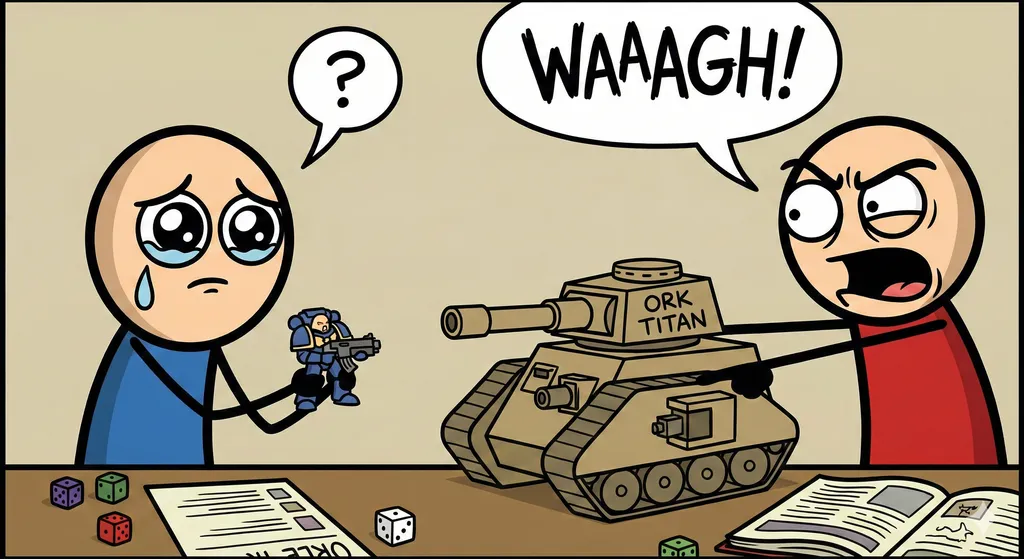
The recent publication of an official Games Workshop base sizes guide for Warhammer 40,000 might seem like a minor administrative update, but for veteran players and competitive enthusiasts, it’s a crucial development. This isn't just about ensuring your Space Marine fits neatly on its plinth; it’s about standardizing the very ground upon which the grim darkness of the far future is fought. As seasoned GMs and designers know, even the smallest measurement can ripple through an entire ruleset.
From a purely mechanical perspective, the base size of a miniature in Warhammer 40k is far from trivial. It dictates everything from movement allowances and charge ranges to line of sight (LoS) and unit coherency. A larger base can block more sight lines, provide a wider footprint for area-of-effect abilities, and make it easier to maintain unit cohesion in tricky terrain. Conversely, a smaller base allows for easier maneuvering through tight spaces and can significantly alter engagement ranges, affecting how many models can attack or be attacked. The subtle difference between a 25mm and a 32mm base for a common troop choice, while visually minor, can be the deciding factor in a critical charge or the difference between holding an objective or losing it by a hair's breadth. This guide explicitly defines the expected base for every unit, eliminating the ambiguity that has plagued competitive play and casual games alike for years. It’s a direct address to the persistent “modeling for advantage” discussions that often crop up at tournaments, ensuring a level playing field where tactical acumen, not cleverly-sized bases, determines victory. For those looking to ensure their armies are compliant, the official base size guide is now the definitive resource.
While base sizes aren't typically a point of deep lore, they contribute significantly to the visual narrative and immersion of Warhammer 40k. Consistent basing ensures that the scale of the battlefield feels right, that a towering Dreadnought looks appropriately imposing next to a squad of Imperial Guardsmen. It reinforces the grimdark aesthetic by providing a uniform foundation for the incredible artistry players pour into their miniatures. Imagine a narrative campaign where every player's models are based inconsistently – the cohesive illusion of a universe at war would quickly fracture. This guide, in its own understated way, helps maintain that vital visual consistency, ensuring that the epic clashes depicted on the tabletop retain their gravitas and cinematic appeal, even if the lore itself doesn't delve into the specifics of a 40mm vs. 50mm disc.
So, what’s the verdict for the table? For competitive players and tournament organizers, this official guide is an unmitigated boon. It provides clarity, reduces pre-game squabbles, and ensures fairness across the board. No longer will players need to consult unofficial wikis or rely on a TO’s discretion to determine if a legacy model is legally based. For new players, it simplifies the entry barrier, removing a layer of hidden rules knowledge. However, the guide isn't without its potential friction points. Many veteran hobbyists own armies that span multiple editions, with some models still on their original, now potentially non-standard, bases. The prospect of re-basing hundreds of miniatures – a time-consuming and often destructive process – might be met with understandable reluctance. While Games Workshop has often stated that players should use the base supplied with the *current* iteration of a model, this guide solidifies that expectation, potentially forcing a choice between cherished older models and competitive legality. Ultimately, this move leans heavily into the structured, competitive aspect of Warhammer 40k, and while it might ruffle some feathers among long-time collectors, the overall benefit of standardization for the health and integrity of the game's competitive scene is undeniable.
Top Pick: Citadel Base Set
For ensuring your armies are always tournament-ready and visually consistent.
Check Price on Amazon →Related Stories
Warhammer 40k 11th Ed: Starter Set Rumors, A New Era Looms
Whispers of Warhammer 40,000 11th Edition's starter set are circulating, signaling potential shifts for Games Workshop's flagship. We dissect what these early m
40k's Many Fronts: Is GW's Skirmish Focus a Strength or Strain?
Games Workshop's increasing investment in Warhammer 40k's myriad 'side games' sparks debate among the community. This article dissects how a diversified product
Combat Patrol 40k: Strategic Value Beyond the Price Tag
Spikey Bits ranks Combat Patrol boxes by 2026 pricing, but true value extends to the table. We dissect this vital entry point, analyzing its mechanics, lore, an